 Grange Plumbing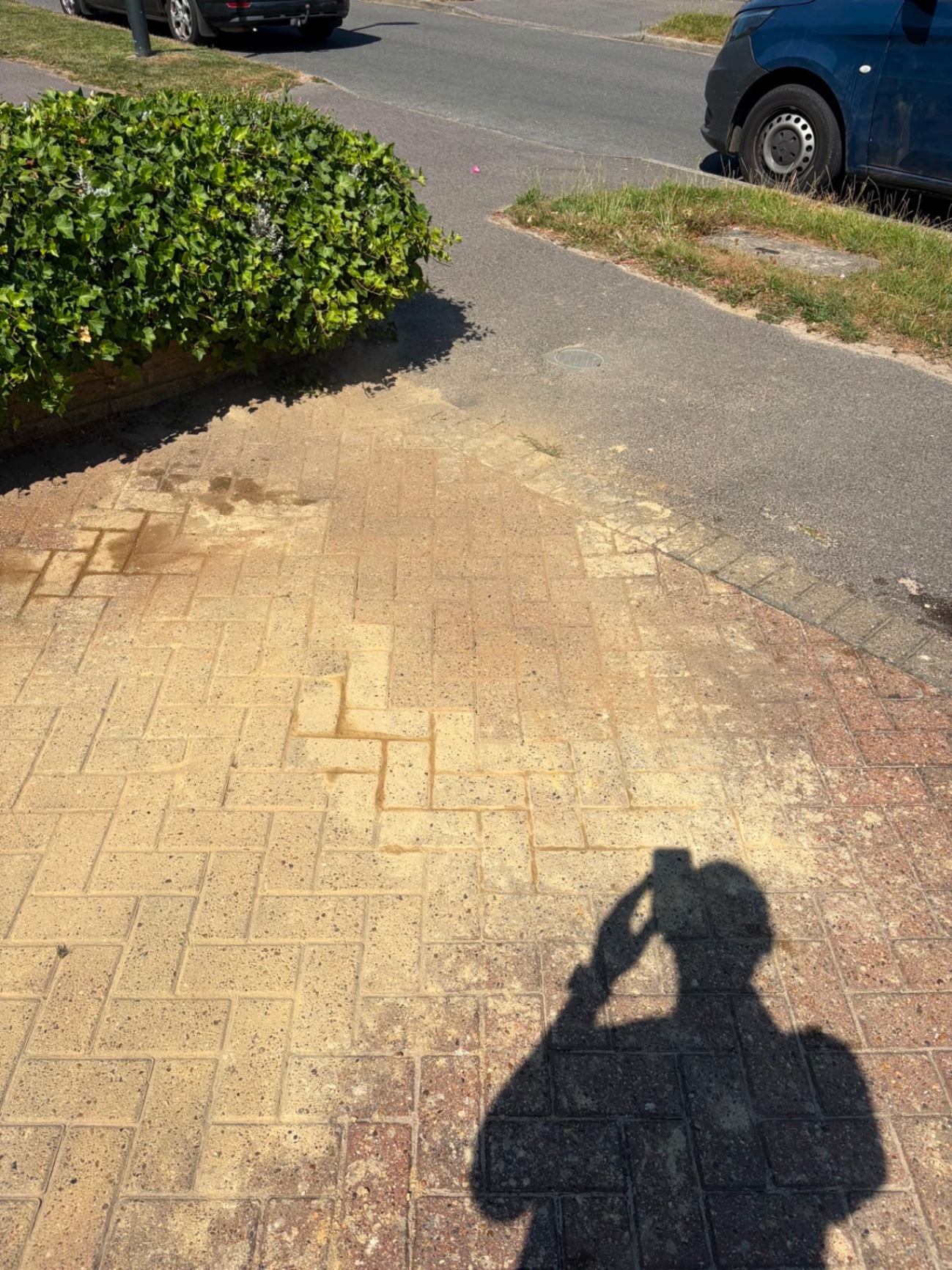
Most people only think about their underground water supply pipe on the day it starts leaking. A damp patch appears on the drive, the water bill jumps, or the pressure drops — and the first question is always the same: is this mine to sort out, or the water company's? The honest answer is that it depends entirely on where the leak is. Below I've set out how responsibility is split in England and Wales, how to work out which side of the line your leak sits on, and what your options are once you know. This is the same explanation I give customers on the doorstep across Sussex every week.
Who owns the water supply pipe?
Short answer
In England and Wales the water company is responsible for the communication pipe up to your property boundary. The homeowner is responsible for the supply pipe from the boundary into the house — including any leak, repair or replacement.
Your water arrives through two different pipes with two different owners. The communication pipe runs from the water main in the road to your property boundary, and belongs to your water company. The supply pipe runs from that boundary into your home, and belongs to you — even though it's buried under your drive, garden or path. Everything downstream of the boundary is a private underground supply, so if it leaks, the repair is the property owner's responsibility.
Water company's responsibility
The water main in the street and the communication pipe running from it to your boundary.
- Street main
- Communication pipe
- Boundary stop tap and meter chamber
- Repaired free of charge
Your responsibility
The private supply pipe from the boundary into the property, plus all internal pipework.
- Supply pipe under your drive or garden
- Internal stop tap
- Leaks, repairs and replacement
- Cost falls to the property owner
How to picture it
Street main → communication pipe (water company) → boundary stop tap → supply pipe (you) → internal stop tap → your taps. The boundary stop tap is the dividing line: everything past it, on your land, is yours.
Boundary stop tap
A small metal or plastic cover, often marked 'W', set into the pavement or just inside the front boundary. Lift it and you'll usually see a valve and sometimes the meter. This is the legal handover point between the two pipes.
Water meter
Where the meter sits in the boundary chamber, it belongs to the water company — but the reading it produces is your bill. A meter that keeps turning with every tap off is the clearest evidence of a leak on your side.
Shared supply pipes
Older terraces and semis in towns like East Grinstead, Crawley and Haywards Heath often share one supply pipe between several houses. Responsibility is then shared between those owners. Most water companies run free or subsidised separation schemes — always worth asking before paying for a private replacement.
Landlords and managed property
For rented and managed property the supply pipe sits with the freeholder or landlord, not the tenant. If you manage property in Sussex, it's worth knowing where the boundary stop tap is before you ever need it.
Signs you may have a leaking water supply pipe
Short answer
The most common signs of a leaking water supply pipe are a rising water bill, low pressure, a permanently damp or waterlogged patch of garden, the sound of running water with all taps off, a wet driveway, sink holes or sunken paving, and internal damp near where the pipe enters the house.
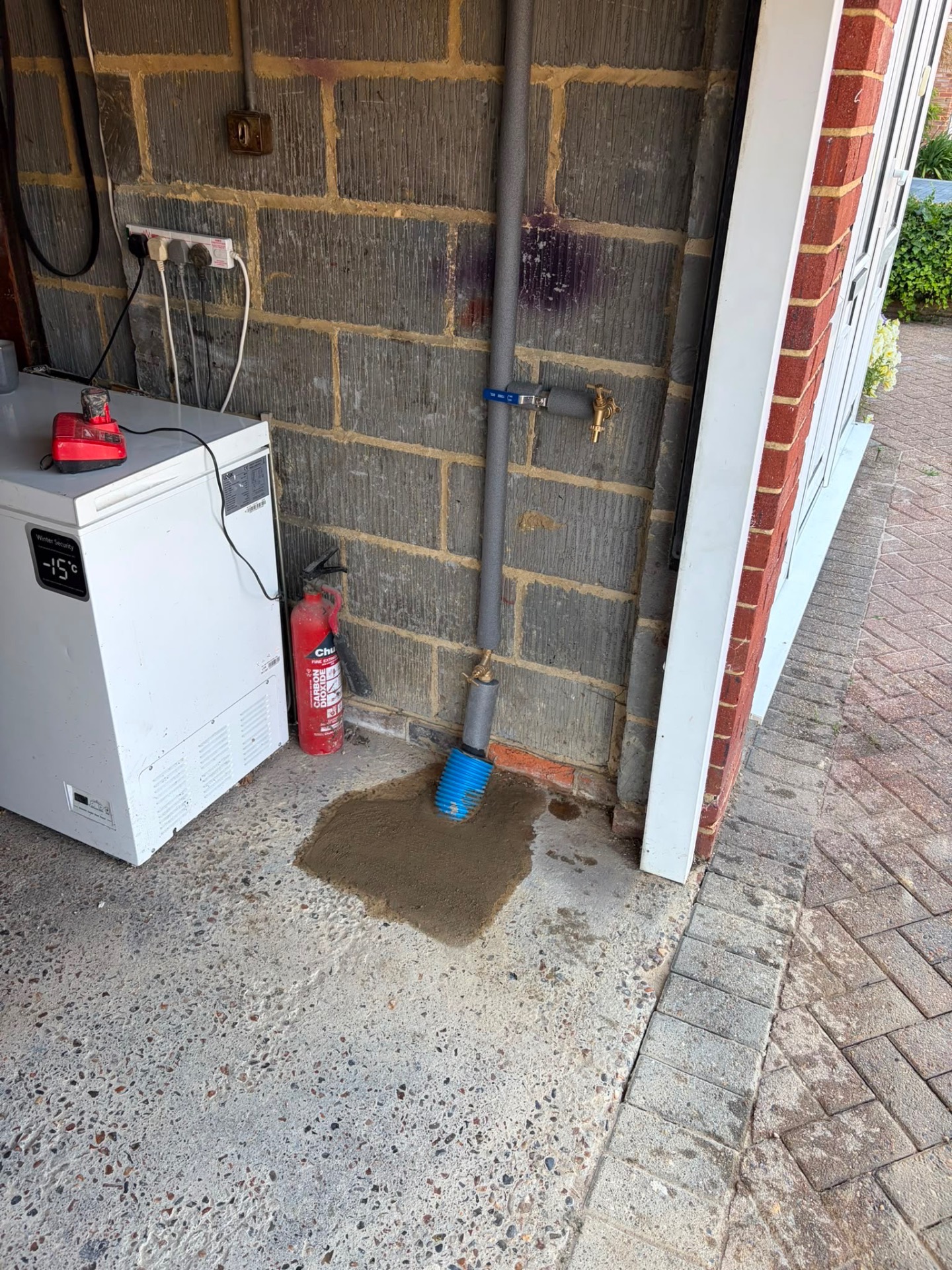
Underground leaks rarely announce themselves. Water follows the path of least resistance, so it can travel a long way along the pipe trench before it surfaces — which is why the wet patch is often nowhere near the actual fault. These are the signs that bring most people to call us.
- Higher water bills with no change in how much water you use
- Low or gradually falling water pressure throughout the house
- A waterlogged or unusually green patch of lawn, even in dry weather
- The sound of running water when every tap and appliance is off
- A driveway or path that never fully dries out
- Sink holes, sunken paving or slabs that have started to dip
- Damp patches on internal walls or floors near the point of entry
The five-minute meter test
Turn off every tap and appliance, then close your internal stop tap. Take a meter reading, wait 30 minutes without using water, and read it again. If the reading has moved, water is escaping between the meter and your stop tap — that's your supply pipe.
Should you repair or replace the pipe?
Short answer
Repair a modern plastic pipe with a single isolated fault. Replace the pipe if it is lead, galvanised steel, has already been repaired more than once, or is undersized — a new MDPE water main lasts 50+ years and restores full pressure.
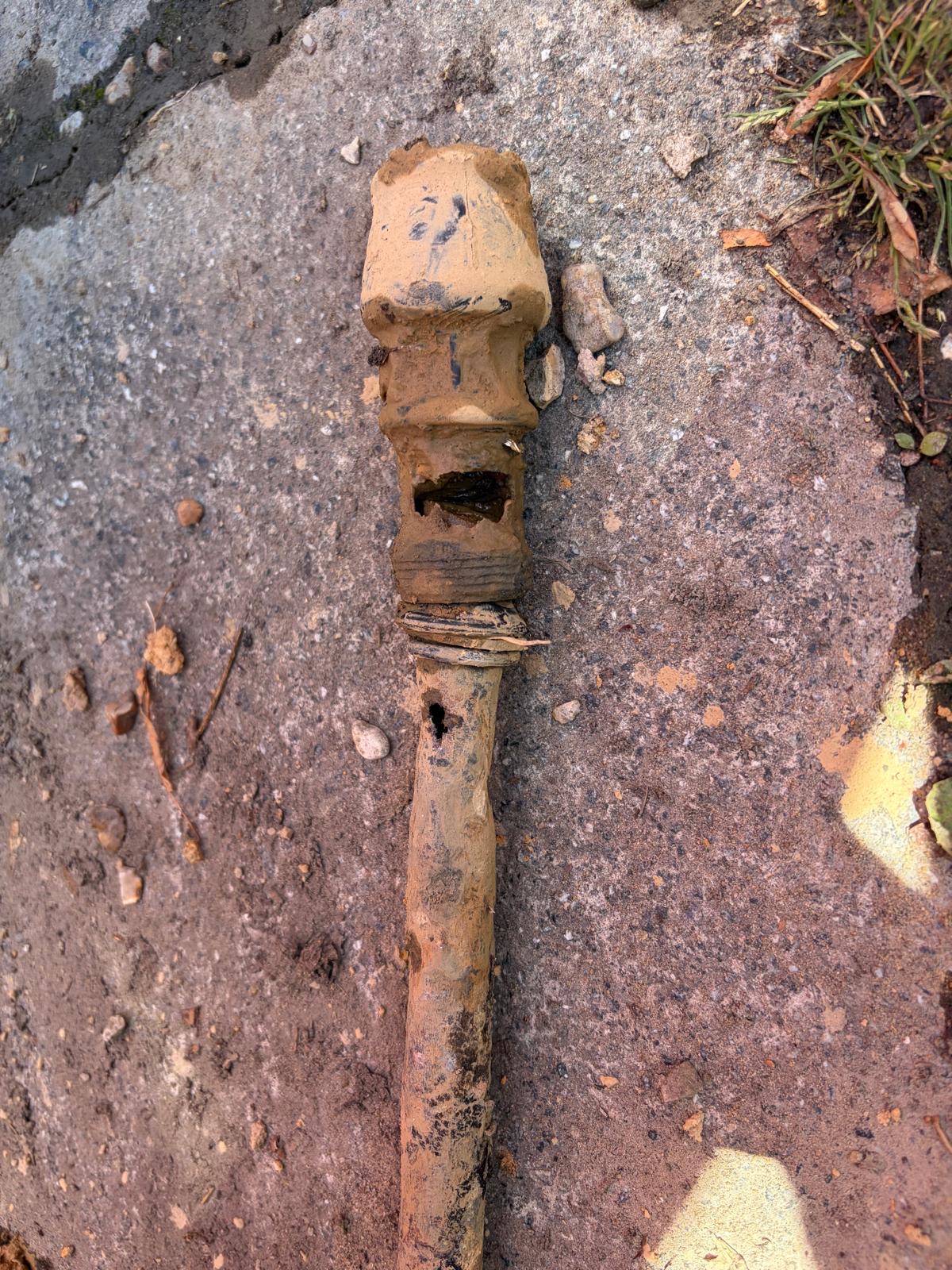
Once we've found the leak there's a genuine decision to make, and it isn't always the same answer. A modern MDPE pipe with a single mechanical failure is worth repairing. An old lead or galvanised steel pipe that has already been patched is usually telling you something. I'd rather explain both options honestly than sell a replacement that isn't needed.
When a repair makes sense
A localised, one-off failure on a pipe that is otherwise in good condition.
- Modern MDPE or blue plastic pipe
- Single identifiable leak point
- No history of previous repairs
- Good pressure elsewhere in the house
- Accessible location, shallow depth
When replacement is better
Where the pipe material or history means another leak is a question of when, not if.
- Lead pipework — a health as well as a leak issue
- Corroded galvanised steel
- Two or more previous repairs
- Persistently low pressure or an undersized bore
- Long runs under driveways where re-digging is costly
Older lead pipes
Lead supply pipes are common in pre-1970s houses. Beyond the leak risk, lead can dissolve into drinking water, so replacement is usually the right call. Read more in our guide to lead water pipe replacement.
Galvanised steel pipes
Steel corrodes from the inside out. By the time one pinhole appears, the rest of the run is usually pitted just as badly — patch it and you'll often be back within a year.
Multiple previous repairs
Every repair adds a joint, and every joint is a future weak point. Once a pipe has been cut into twice, replacement is normally the cheaper option over a ten-year view.
Future-proofing
A new 25mm or 32mm MDPE main gives better flow for combi boilers, showers and outside taps, and is rated for 50+ years. Typical costs are set out in our water main replacement cost guide.
How Grange Plumbing investigates and fixes supply pipe leaks
Short answer
We trace the leak with non-invasive leak detection, excavate only where needed, either repair the pipe or install a new MDPE water main using trenchless moling, pressure test the new supply, then reinstate the ground.
We work across Sussex and the Surrey border — East Grinstead, Crawley, Crawley Down, Forest Row, Haywards Heath, Horsham, Tunbridge Wells and Redhill among them. The process below is how a typical leak detection and repair job runs from first call to reinstatement.
- 1
Leak investigation
Meter testing, acoustic correlation and thermal imaging to pinpoint the leak before anything is dug up. Getting this right is what keeps the excavation small.
- 2
Confirming responsibility
If the evidence points to the communication pipe rather than your supply pipe, we'll say so and help you report it to the water company — there's no reason for you to pay for their repair.
- 3
Targeted excavation
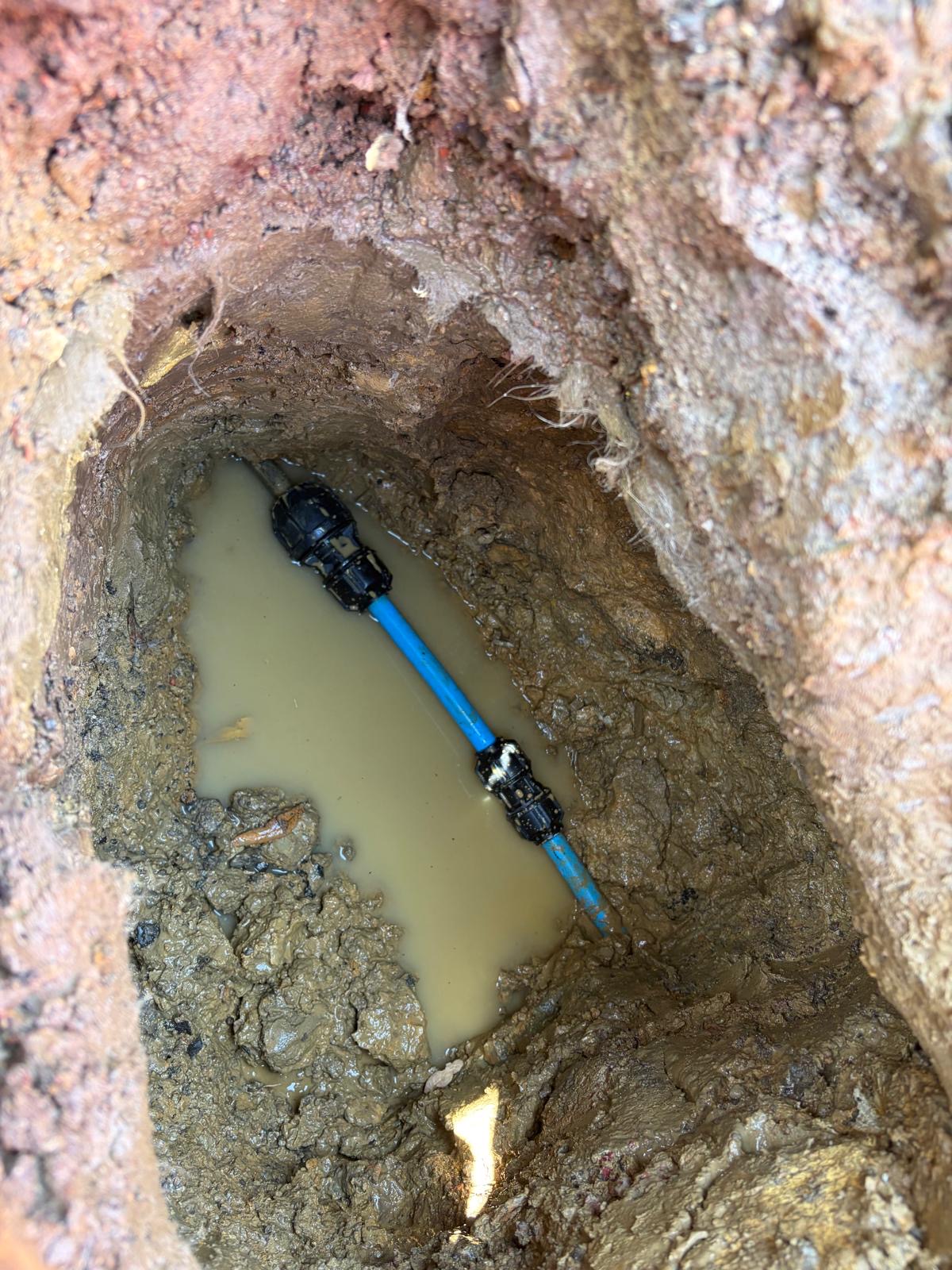
A small pit over the confirmed leak position, hand-dug near other services, rather than a trench across the whole garden.
- 4
Repair or replacement
Either a proper mechanical repair on sound pipe, or a full new supply where the pipe has had its day.
- 5
Trenchless moling
For replacements we mole the new MDPE pipe underground between two small pits — no trench across your lawn, drive or block paving. See our moling service.
- 6
Pressure testing and connection
The new main is pressure tested, chlorinated where required, connected at the boundary and to a new internal stop tap.
- 7
Reinstatement
Pits backfilled and compacted, paving relaid or concrete made good, site swept and left tidy.
Typical timescale
Most domestic supply pipe leaks are located within a couple of hours. A straightforward repair is usually same-day; a full water main replacement by moling is normally a single day, sometimes two if reinstatement is extensive.
The finished job
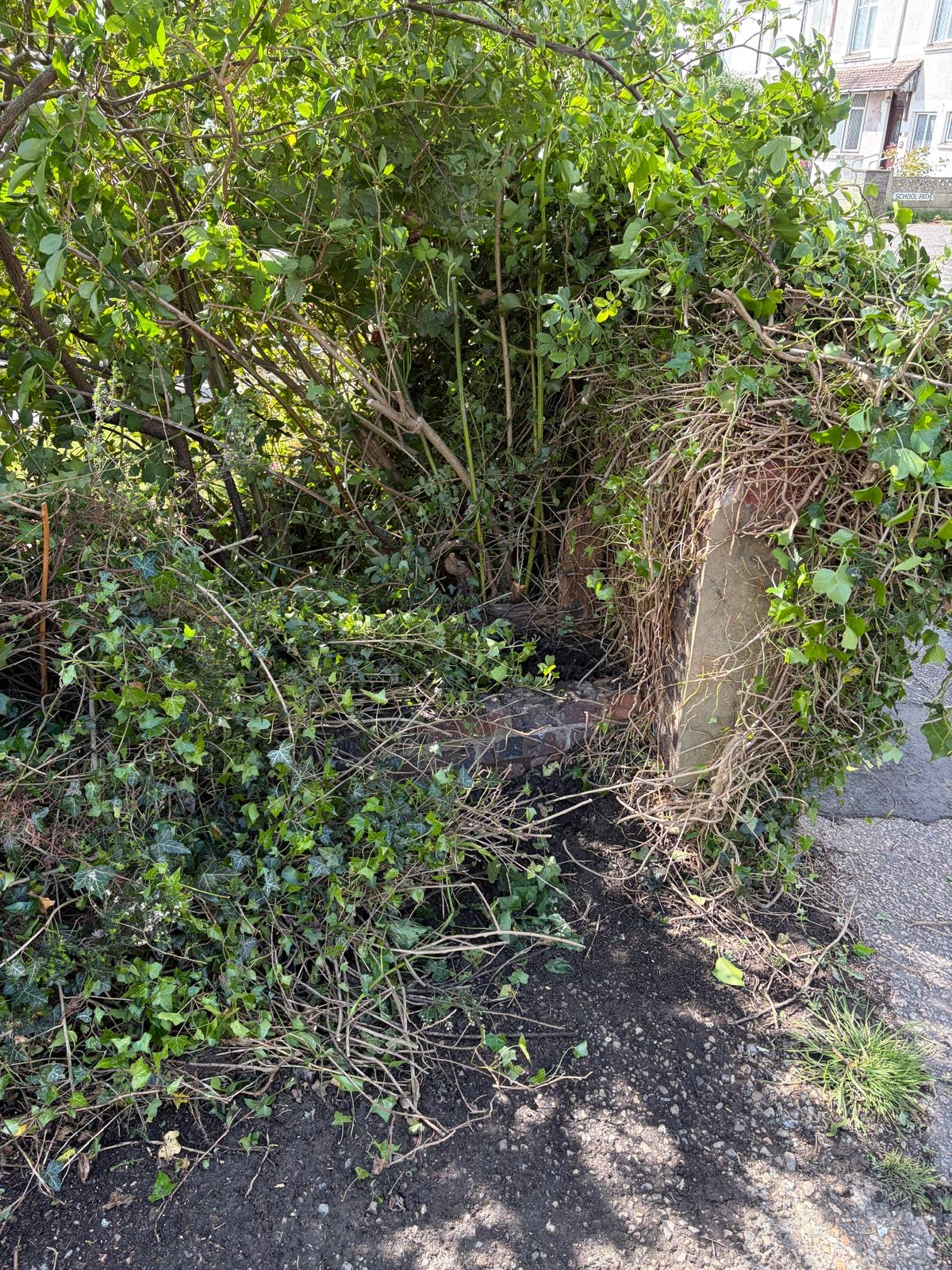
A supply pipe replacement done properly doesn't leave a scar across the front garden. On the Sussex job pictured here we replaced a badly corroded steel main with new MDPE, fitted a modern lever stop tap inside, and reinstated the driveway so you'd struggle to tell where we'd been. You can see more examples in our case studies.
Key takeaways
- The water company owns the communication pipe up to your boundary; you own the supply pipe from the boundary into the house.
- The boundary stop tap (the small 'W' cover in the pavement or front garden) is the usual handover point.
- If your internal stop tap is off and the meter still turns, the leak is almost certainly on your private supply pipe.
- Ask your water company to attend first — they'll confirm whose side the leak is on free of charge.
- Buildings insurance rarely pays to replace the pipe itself, though it may cover resulting damage.
- On older lead or steel pipes, a full trenchless replacement usually works out better value than repeated repairs.
Frequently Asked Questions
Who pays for a leaking water supply pipe?
If the leak is on the supply pipe — the section from your boundary into the house — the property owner pays. If it's on the communication pipe in the street or up to the boundary, the water company pays and repairs it free of charge. Always ask them to attend and confirm before you commission private work.
Does Southern Water repair my supply pipe?
Southern Water, and the other suppliers covering Sussex and Surrey, are responsible up to your boundary only. They will usually attend free of charge to confirm which side the leak is on, and some run discretionary schemes or subsidies towards private supply pipe repairs — it's worth asking. Beyond the boundary, the repair is yours to arrange.
Can I claim on insurance for a leaking supply pipe?
Standard buildings insurance normally covers damage caused by escaping water but not the cost of replacing the pipe itself. Many water companies sell optional supply pipe cover for a few pounds a month, and some home emergency policies include it. Check your policy schedule before assuming you're covered — and take photographs before any work starts.
How much does a supply pipe repair cost?
A straightforward, accessible repair on a sound pipe typically runs from a few hundred pounds including excavation and reinstatement. Cost rises with depth, ground conditions and whether the leak sits under a driveway or paving. We give a fixed written price after the leak has been located, not before.
How much does a new water main cost?
Most domestic water main replacements in Sussex fall between roughly £1,500 and £3,500 depending on length, pipe diameter, ground conditions and reinstatement. Our water main replacement cost guide breaks the figures down in detail.
Do I need planning permission to replace a water supply pipe?
No. Replacing a private supply pipe within your own property does not need planning permission. If the new pipe has to cross a public highway or connect to a new point on the main, the water company will need to be notified and may carry out that section themselves.
Can you replace lead water pipes?
Yes. Lead supply pipe replacement is one of the most common jobs we do. We install new MDPE using trenchless moling wherever possible, so the old lead pipe is left redundant underground and your garden or drive stays intact. Some water companies contribute towards lead pipe replacement — worth checking first.
How long does the work take?
Leak detection is usually a couple of hours. A localised repair is often completed the same day. A full water main replacement by moling is typically one day, including connection, pressure testing and making good, with a second day occasionally needed for larger reinstatement.
What should I do first if I think my supply pipe is leaking?
Close your internal stop tap and check whether the meter is still turning. If it is, report it to your water company so they can rule out their side, then get a leak detection survey booked. Keep a note of your meter readings — they are useful evidence for both the water company and any insurance claim.
Need a Free Quote?
Free site visit, fixed written quote, no call-out fees — across Sussex & Surrey.