
- Fully Insured
- ·
- Fixed Written Quotes
- ·
- 5★ Rated Locally
- ·
- Sussex & Surrey
What is moling?
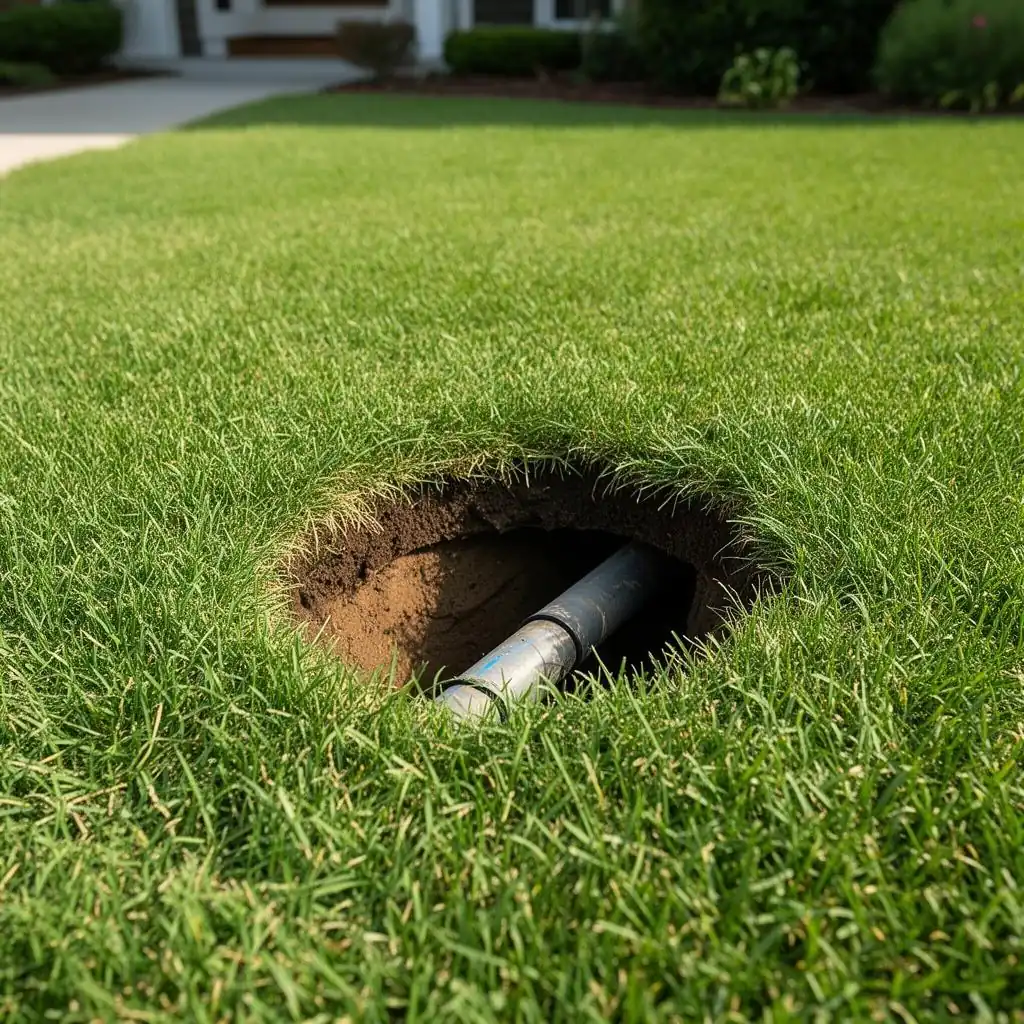
Moling is a trenchless underground boring technique that allows us to install new pipework without digging a trench. We drive a mole — a pneumatic boring tool — underground between two small access pits, threading new pipe through as it goes. The result is a fully replaced pipe with minimal disruption to your garden, driveway or landscaping. It's faster, cleaner and far less disruptive than traditional trenching methods.
Moling — sometimes called impact moling or trenchless pipe replacement — is the modern way to install or replace underground pipes without digging an open trench.
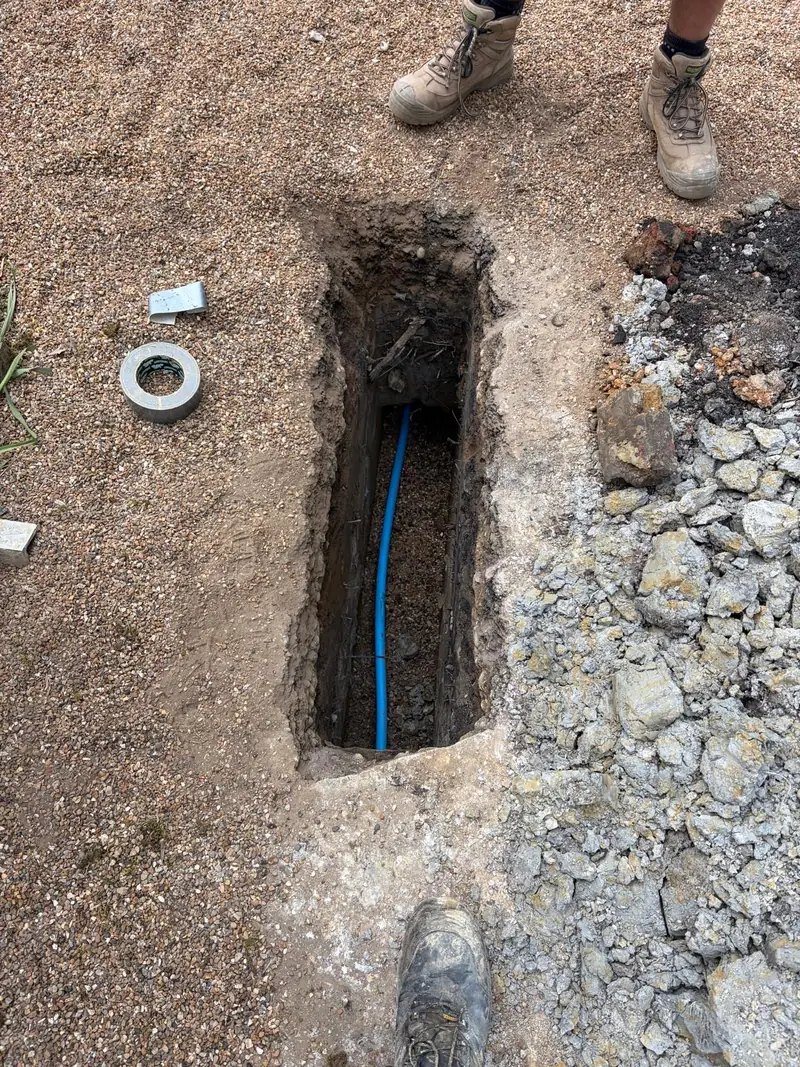
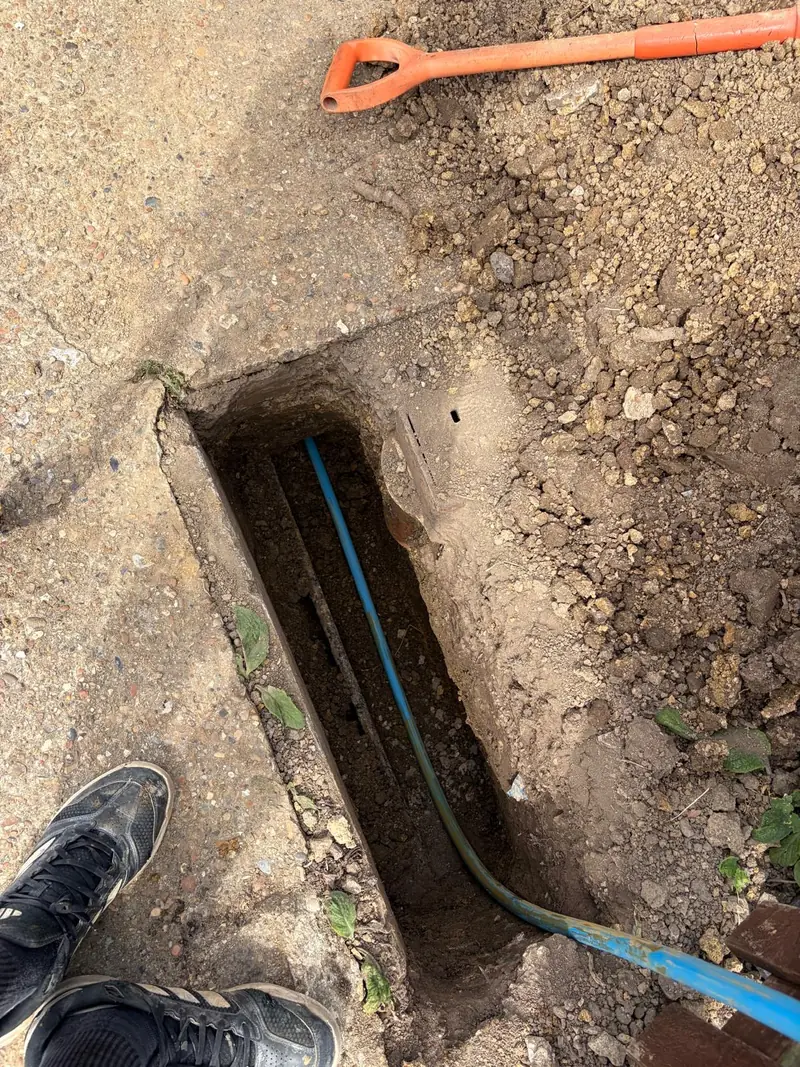
We dig two small pits, one at each end of the run. A pneumatic piercing tool is fired horizontally through the soil between them, pulling the new MDPE pipe behind it. The result: a brand-new water main or service pipe, with your lawn, paving and landscaping left exactly as we found it.
It's the standard approach for replacing failing lead or galvanised water mains across older Sussex and Surrey properties.
When is moling used?
- Water main replacement under driveways, paths or gardens
- New water supply connections to properties
- Pipe replacement under roads or paved surfaces
- Any situation where trenching would cause unacceptable disruption
Four steps. No trench.
A typical domestic water main replacement, start to finish in a single day.
- 01
Survey & quote
We assess the route, locate existing services and give you a clear fixed price.
- 02
Two small access pits
Just an entry and exit point — no trenches across your garden or driveway.
- 03
Pneumatic mole launched
An air-driven mole bores a clean tunnel and pulls the new MDPE pipe through.
- 04
Connected & tested
We pressure-test, reinstate the pits and leave the site as we found it.
Why choose moling over a trench?
No trenches
Lawns, driveways, paths and patios stay intact — only small entry and exit pits are needed.
Faster jobs
A typical domestic water main replacement is completed in a single day.
Lower total cost
You save on excavation, spoil removal and reinstating turf, paving or tarmac.
Versatile
Suitable for water mains, gas (with Gas Safe partner), drainage and electrical ducting.
When is moling the right choice?
Moling is the go-to method for most domestic underground pipework jobs where preserving the surface matters.
Replacing old lead, galvanised iron or worn polythene water mains
Installing a new water supply to an outbuilding, annexe or garden tap
Running drainage or duct under a driveway, path or lawn
Avoiding costly reinstatement of block paving, tarmac or block-laid driveways
Repairing a leaking supply pipe without digging up the whole run
Moling cost per metre — UK guide
Pricing depends on pipe diameter, run length, ground conditions and access. As a working guide for the UK in 2025:
25mm MDPE water main
£80–£150 / m
32mm MDPE service pipe
£100–£180 / m
Indicative only — every site is different. We always provide a fixed written quote after a free site visit so you know the total cost up front, including connecting to the stopcock, pressure testing and reinstating the small entry/exit pits.
Read the full moling cost guideMoling across Sussex & Surrey
Based in Crawley, we cover the whole of West Sussex, East Sussex and Surrey for moling and water main replacement.
Moling — frequently asked
Moling is the method we use for water main replacement — find out more about our water main replacement service. For a full price breakdown, see our water main replacement cost guide. You can also see a real job from start to finish in our underground water leak & steel pipe replacement case study.
Grange Plumbing provides moling across Sussex & Surrey
- East Grinstead
- Crawley
- Haywards Heath
- Horley
- Burgess Hill
- Lingfield
- Forest Row
- Copthorne
- Turners Hill
- Felbridge
- Oxted
- Redhill
- Reigate
- Cuckfield
- Lindfield
We also cover all surrounding areas of West Sussex and Surrey. Not sure if we cover your area? Call us on 07894 956041.
Moling in detail — method, materials and limits
Moling (also called impact moling or trenchless pipe replacement) is the method we use for the large majority of underground water supply pipe replacements in Sussex and Surrey. It is not the right answer on every site, so it is worth understanding how it actually works and where it stops being appropriate.
The equipment and the process
A pneumatic mole is a cylindrical percussive tool driven by compressed air. It is launched from a small pit at a set depth and angle, and hammers its way forward through the ground, compacting soil radially outward rather than removing it. The bore it leaves behind is stable in most soils, and the new MDPE supply pipe is drawn through behind the tool in the same operation.
A typical domestic job needs two pits roughly 600mm square: one at the boundary next to the meter or company stop tap, one against the house where the pipe rises. Everything in between — driveway, lawn, patio, planting — is untouched. On completion we make the connection at both ends, fit a new internal stop tap where needed, pressure test, chlorinate if required and backfill the two pits.
What we install
We replace old lead, galvanised iron and alkathene supplies with blue MDPE to WRAS standards, normally 25mm for a standard domestic property and 32mm where the run is long, the property is large or a high-demand shower system is planned. Where the pipe passes beneath a driveway or hard standing we duct it, so any future work does not mean disturbing the surface again.
Depth matters as much as material. New supply pipes are laid at a minimum of 750mm cover to stay below frost and out of the way of routine garden work. A surprising number of the failures we attend are pipes laid far too shallow by a previous installer.
When moling is not the right method
Moling is unsuitable where the ground is full of flint or rubble, where the route is congested with other buried services, where there are large tree roots directly on the line, or where a made-up ground layer would deflect the tool off course. Chalk with flint bands — common on the North Downs above Reigate, Redhill, Caterham and Dorking — is the classic case.
We survey the route and the ground before quoting rather than promising a trenchless job and then discovering otherwise halfway through. Where a short open section is the sensible answer, we say so at quotation stage and price it in.
Cost, timing and disruption
Most domestic moling jobs are completed in one working day, including connection and testing. Typical costs run from around £1,200 for a short straightforward run to about £2,800 for long runs, difficult ground or awkward access. The quote is fixed and given in writing after a free site visit.
The saving against trenching is rarely just labour. Cutting and reinstating a trench across block paving, resin-bound gravel or a tarmac drive can cost more than the pipework, and colour-matched reinstatement of a surface laid years ago is often impossible.