 Grange Plumbing
Service Area
Sussex (East Grinstead / Mid Sussex)
Service
Underground leak detection & water main replacement
Property Type
Detached house — block paved driveway
Old Pipe
Old galvanised steel supply pipe, ~50+ years old
Problem
Hidden underground leak, multiple pinholes, sunken paving
Solution
Excavated, replaced with new 32mm MDPE, new internal & external stop taps, concrete reinstated
Water Supply
Mains water — single household supply
Time on Site
1 working day
Images Included
12 original site photos
Video Included
Yes — on-site repair clip
The customer's problem
Short answer
The homeowner had noticed a slight drop in water pressure, an unusually damp patch on the block paving, and — the tell-tale sign — a section of driveway that had started to sink. Their water bill had also crept up over the previous quarter. A hidden underground leak on the buried supply pipe was the only explanation that fit.
When we first walked the driveway we could see it immediately — the block paving above the pipe run had subsided by around 30–40mm, and the joints between the blocks had started to sink and lose their sand. This is a classic sign of a long-running underground leak: water washes out the fine material under the sub-base, and the surface above quietly drops. The homeowner had put it down to settlement and lived with it for a few months. In reality it was the pipe below telling us exactly where it was failing.
Investigation
Short answer
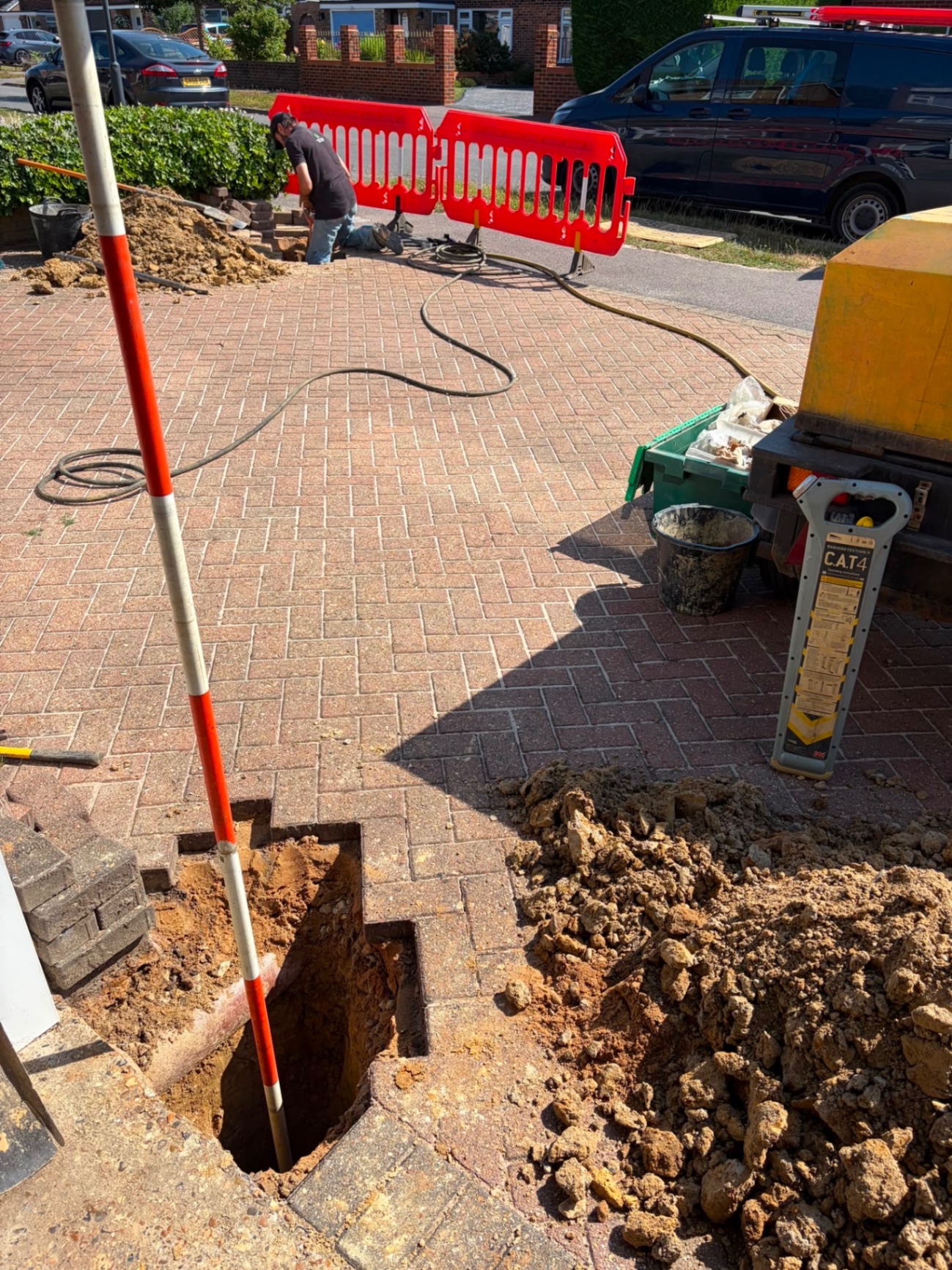
We isolated the property, watched the external water meter with everything off, and confirmed the meter was still ticking — clear proof of water leaving the supply pipe underground. A CAT4 cable avoidance scan and acoustic listening confirmed the leak was directly under the sunken paving.
Every underground leak detection job starts the same way: verify the leak is actually on the supply pipe rather than internal plumbing. We closed the internal stop tap and confirmed the meter kept moving — proof the escape was upstream of the house. Acoustic listening along the paving picked up the characteristic hiss right where the surface had sunk. Before touching a spade we ran a CAT4 cable avoidance tool across the run to make sure there were no buried cables or gas services in the way.
Excavation
Short answer
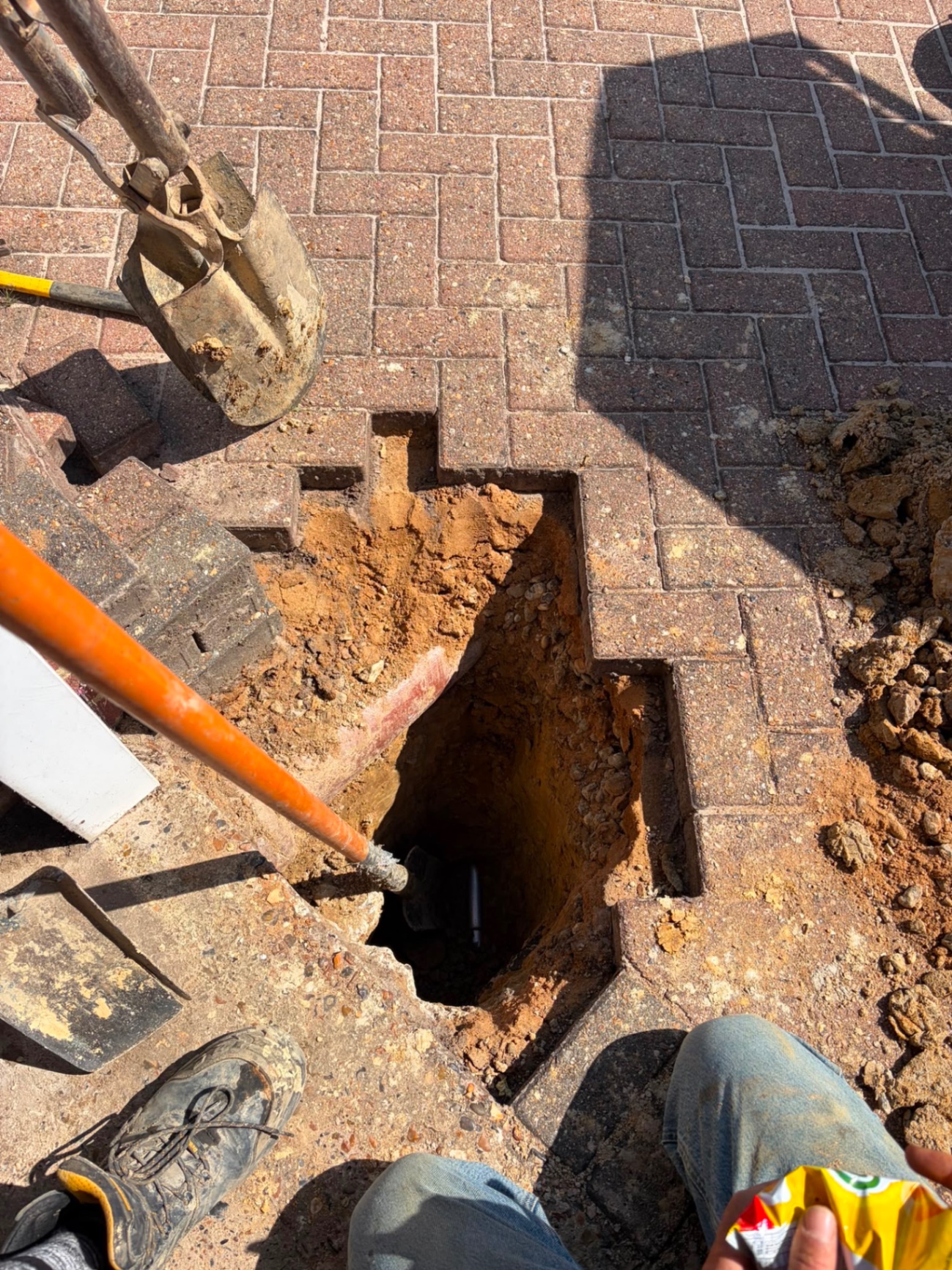
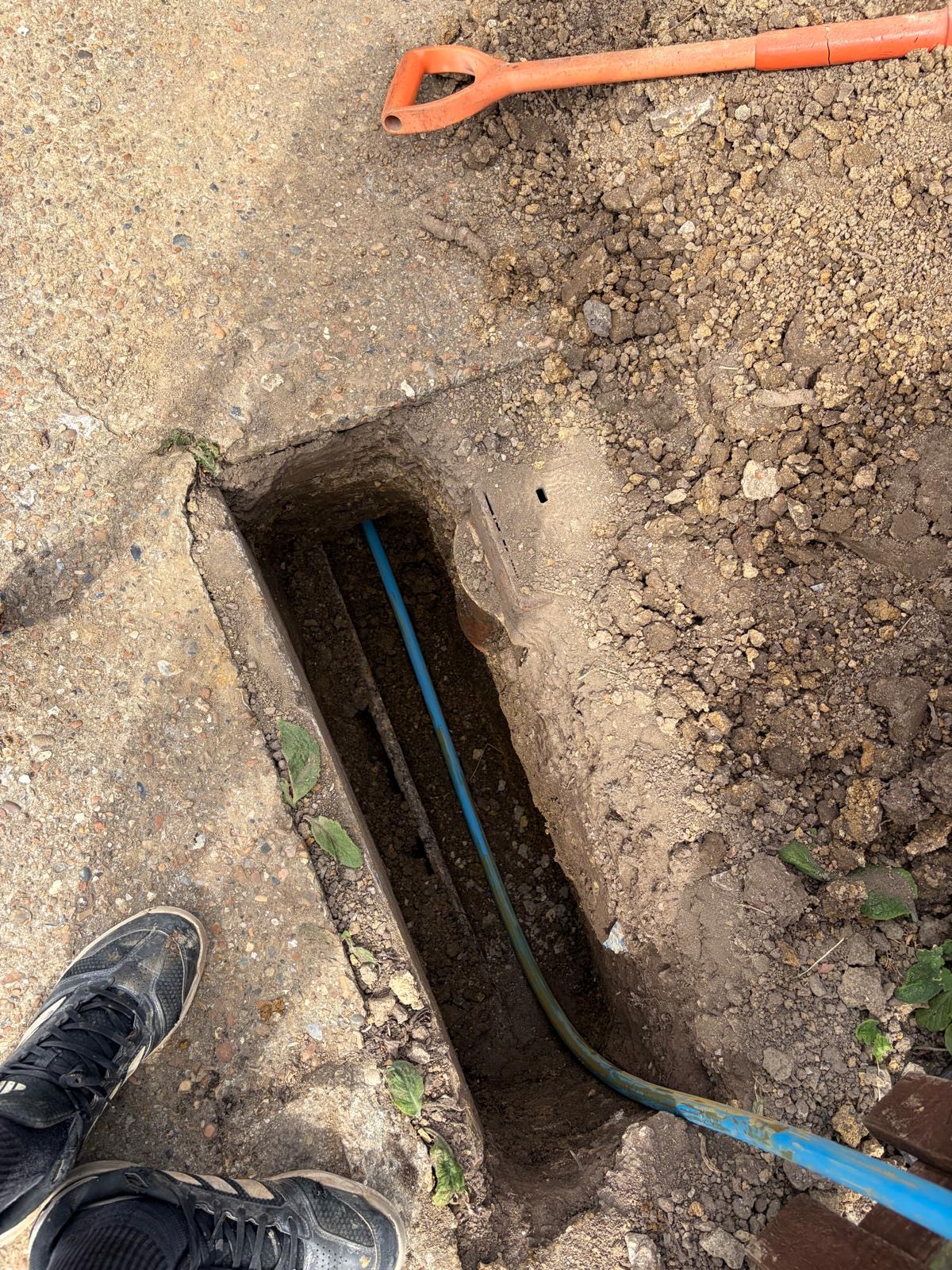
We lifted a small section of block paving directly above the leak, dug a narrow inspection pit down to pipe level (roughly 750mm here), and exposed the buried service. Paving was carefully set aside for re-use so the driveway could be put back like-for-like.
We keep excavations as small as the job allows. Block paving comes up in one piece and is stacked to one side. The sub-base and native soil are separated to make backfilling and compaction quicker at the end of the day. As soon as pipework was visible we stopped machine-digging and finished by hand — you never want the first thing to touch an old, fragile steel service pipe to be a spade edge.
What we found
Short answer
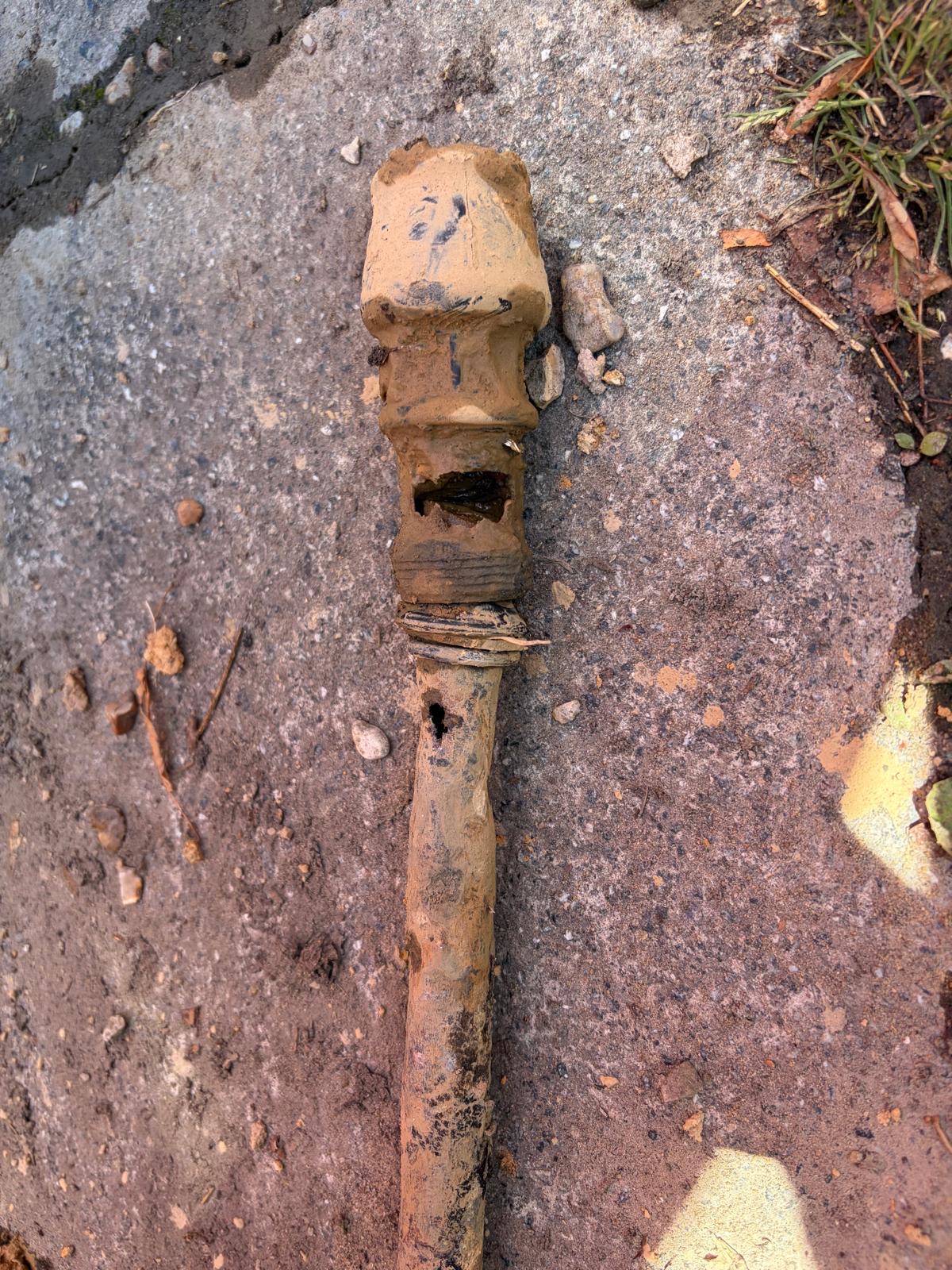
A heavily corroded galvanised steel supply pipe with two clearly visible pinhole leaks and a third weeping fitting further along. The pipe wall had rusted from the inside out, thinned in patches, and finally failed at its weakest points. Repairing a single leak on a pipe in this condition would only have bought a few months.
The photograph below shows the section we pulled out of the ground. You can clearly see two dark, water-eroded holes on the pipe body and a badly corroded compression fitting where an earlier repair had been attempted. The rest of the pipe wall was pitted and flaking. This is what a supply pipe looks like at the end of its life — and it's exactly why we quoted for a full water main replacement rather than another spot repair.
Expert Insight — Grange Plumbing
"Although the customer only knew about one damp spot, once we opened the ground we could see the whole pipe was on borrowed time. This is something we see almost every week on ageing galvanised steel services — repair one pinhole and a second one appears further along within months. On any pipe over about forty years old, a single confirmed leak is a strong signal that the pipe itself is finished, not the fitting. Replacement is nearly always the cheaper long-term call."
The repair process
Short answer
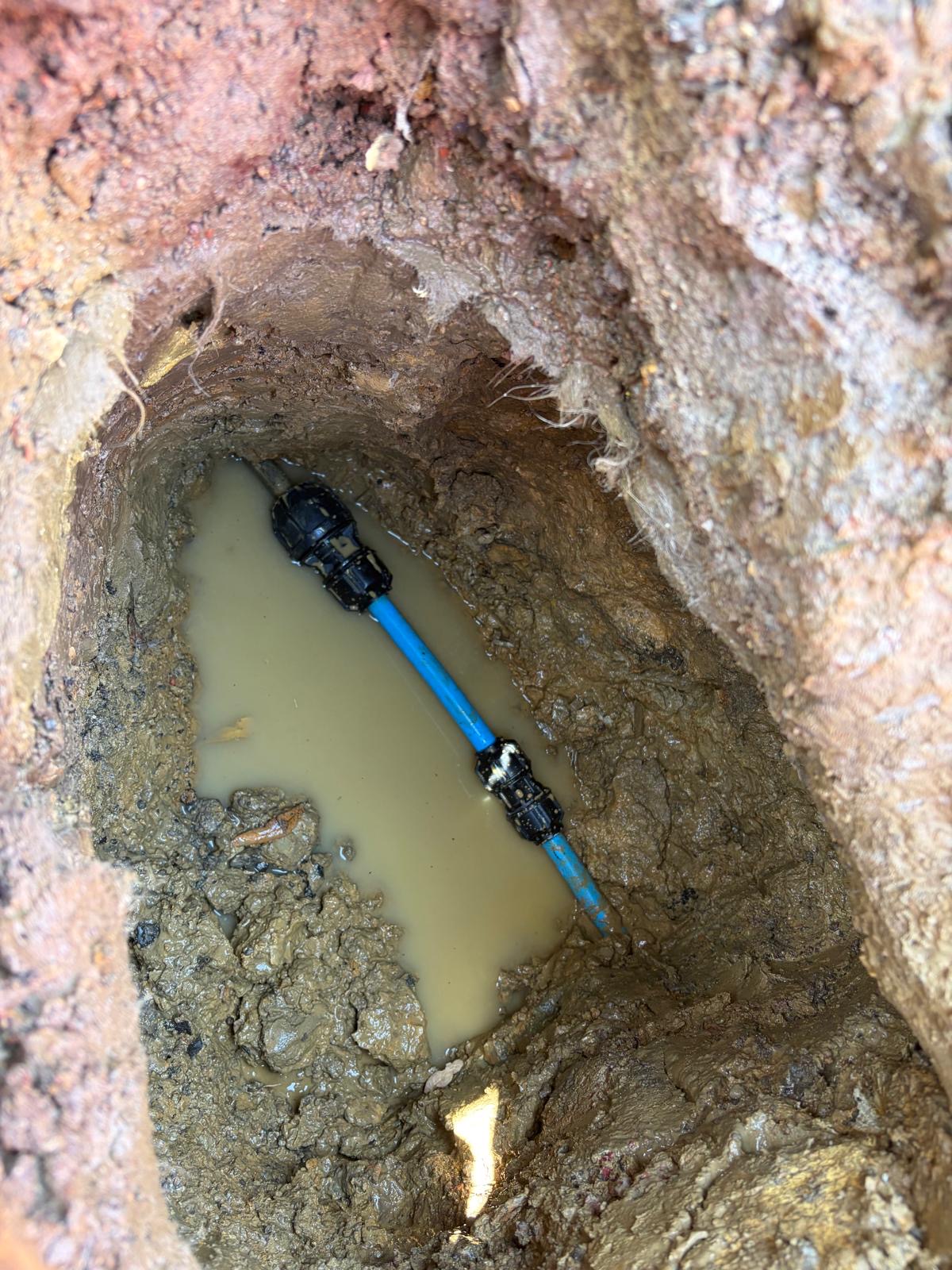
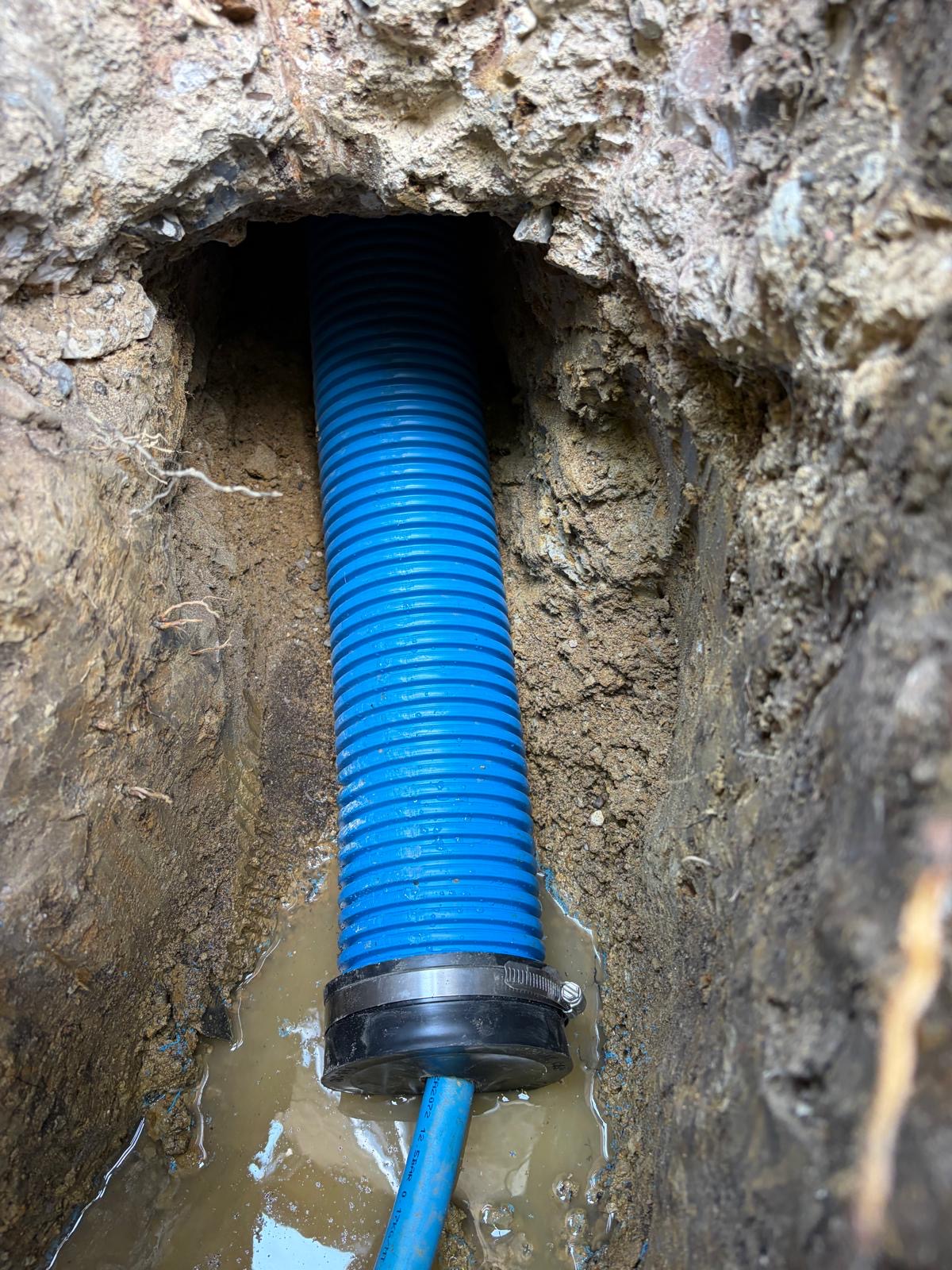
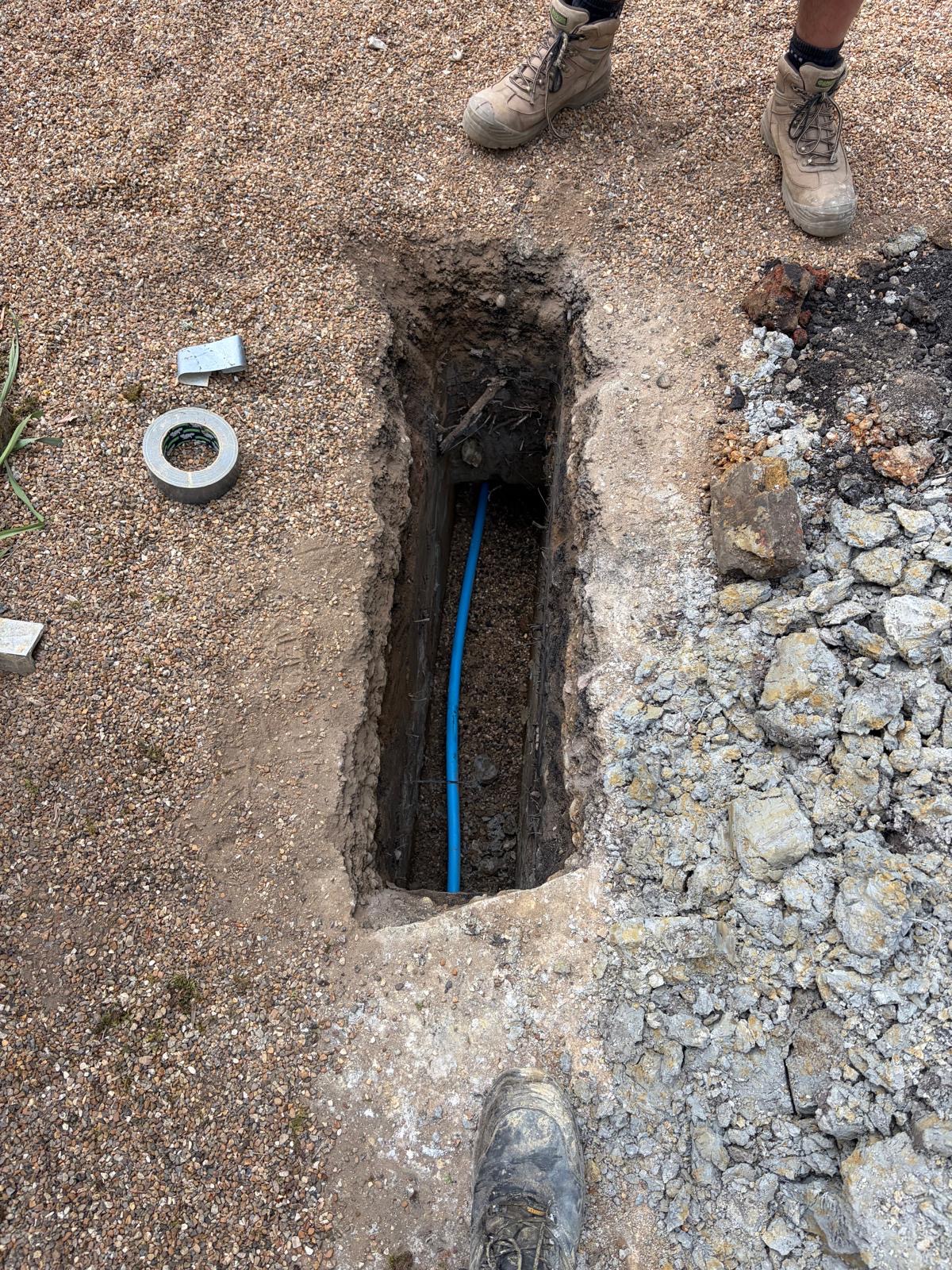
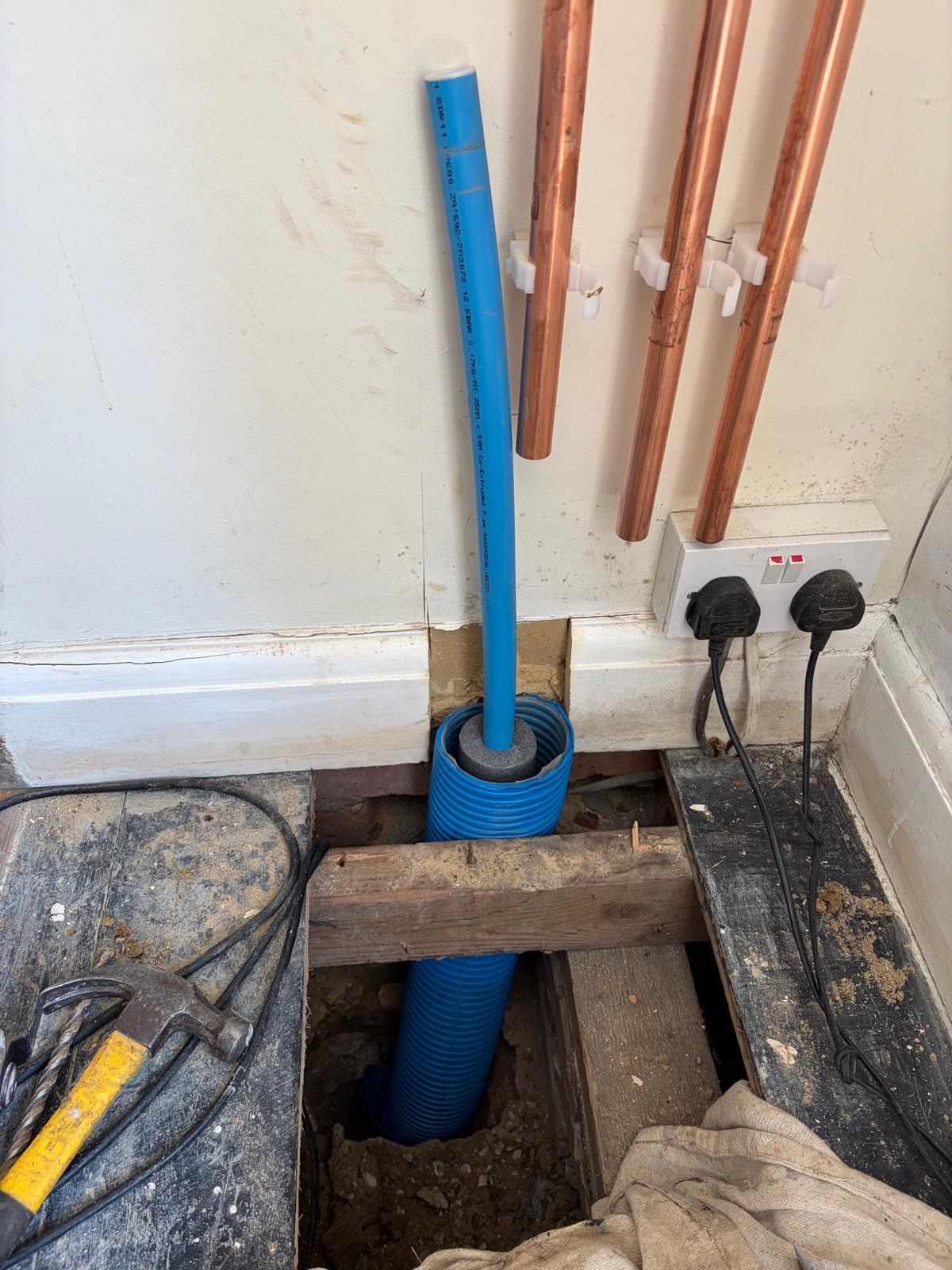
We isolated the water at the boundary, cut out the failed steel section, ran a new 32mm MDPE water main through protective blue ducting from the boundary pit into the property, fitted new WRAS-approved compression joints, installed a new internal lever stop tap, and pressure-tested the new supply before backfilling.
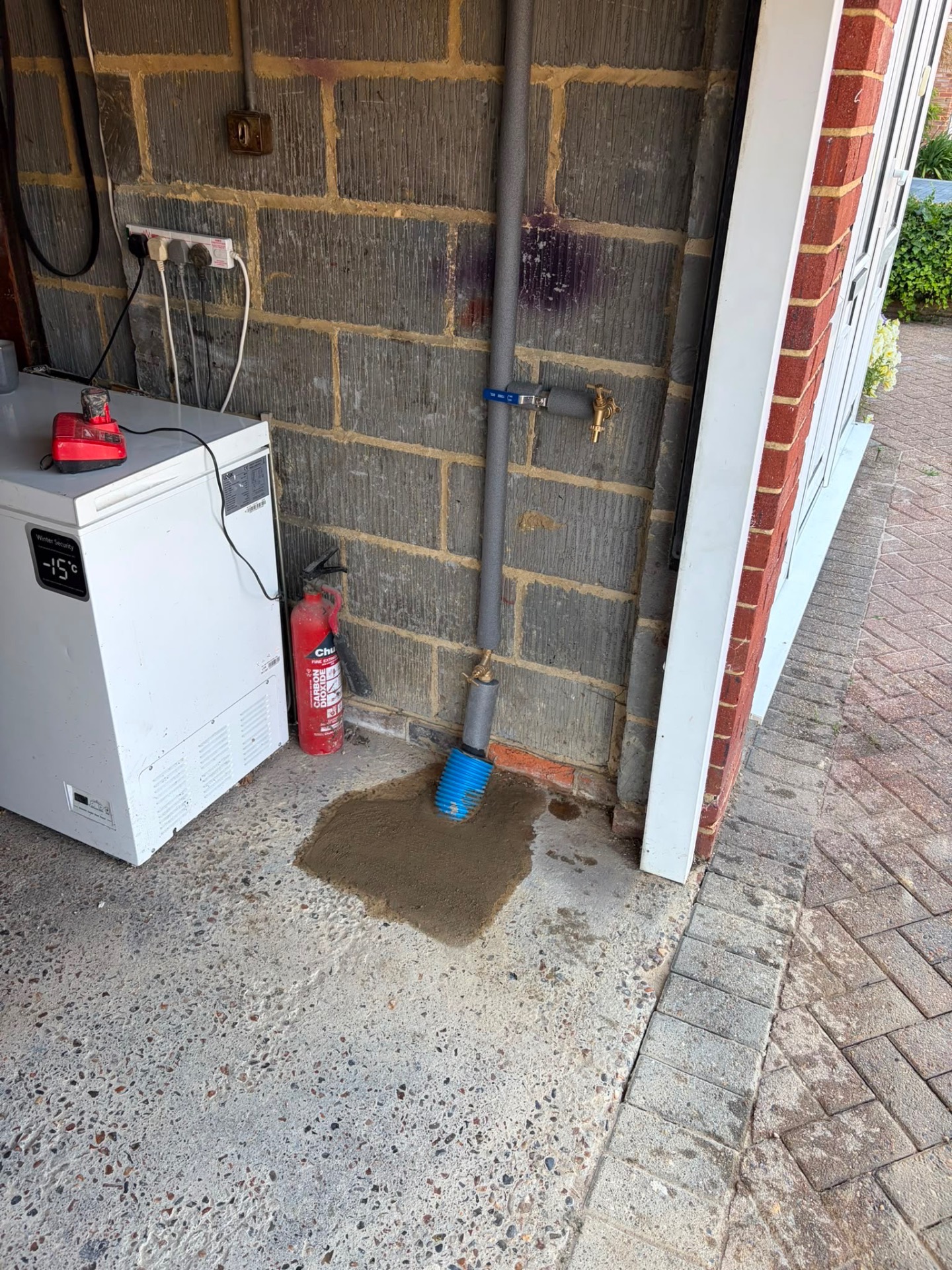
Because the run was mostly under paving, this was an ideal moling job in principle, but on this property the run was short enough and the pit access good enough that we pulled the new MDPE through directly. New pipe was sleeved in a blue protective duct at every wall entry — a small detail that means the pipe can be renewed again decades from now without breaking up the floor.
Repair video
A short on-site clip from the day, filmed by our engineer. It shows the excavation, the failed steel pipe alongside the new blue 32mm MDPE, and the connection fittings before backfilling.
Key moments
Transcript
Short site clip from a real Grange Plumbing underground water main replacement in Sussex. The camera pans across the excavation pit on a block-paved driveway, showing the old corroded galvanised steel supply pipe alongside the newly installed 32mm blue MDPE water main. A WRAS-approved compression fitting has been used at the joint. The trench is neat, the pipe is bedded correctly, and the new main is ready for pressure testing before backfilling and reinstatement.
Completed repair
Short answer
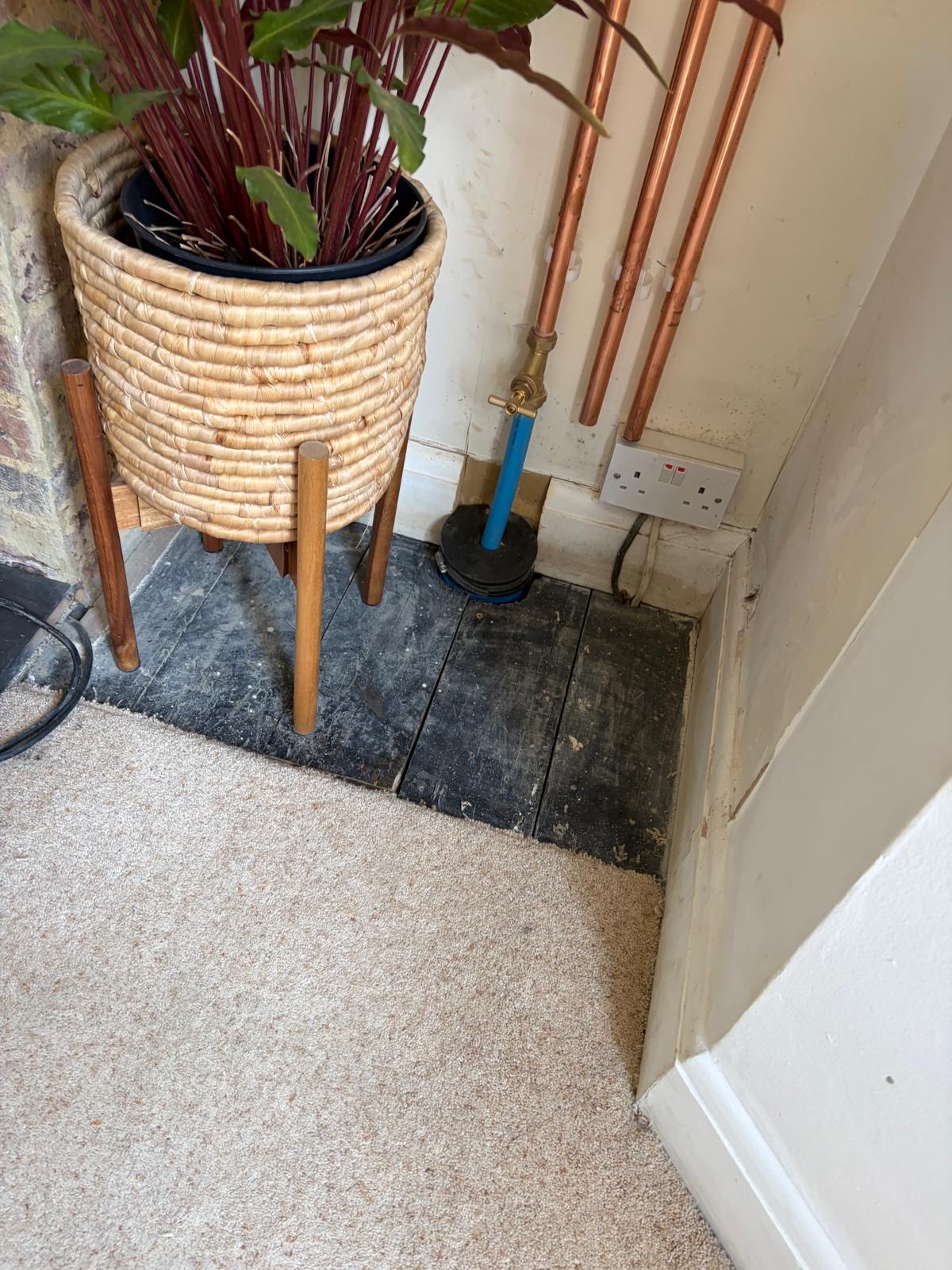
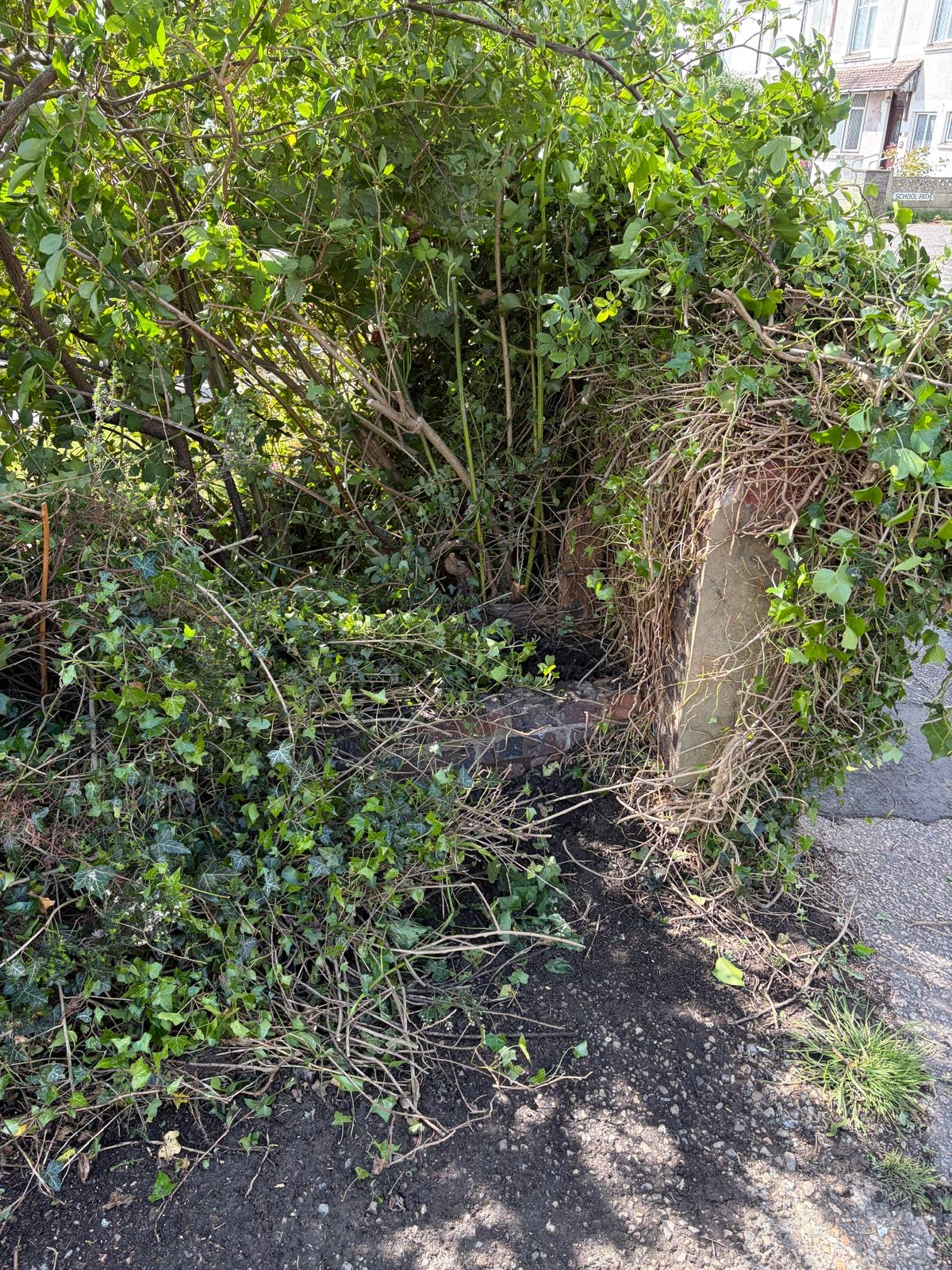
New quarter-turn stop taps fitted inside and outside the property, concrete reinstated over the entry pit, block paving relaid, and the site left clean and swept. Water pressure at the kitchen tap was noticeably stronger than before.
Recommendations we made
- Replace any remaining galvanised steel internal pipework runs at their next natural maintenance point — the internal pipe is the same age as the pipe we just took out.
- Lag both the new internal and external stop taps and the incoming main where it passes through cold voids, to protect against freezing next winter.
- Note the position of the new external stop tap in the property file — many older homes lose track of theirs.
- Keep an eye on the water meter for the first week: with a new pipe it should sit completely still with everything off.
- For neighbours on the same 1960s–70s street, consider a proactive pipe inspection — this pipe was not an isolated case for its era.
Customer takeaways
For this Sussex homeowner, the sunken paving turned out to be the cheapest possible warning sign. Caught earlier, an underground leak like this could have undermined the drive and worked its way toward the front elevation. Caught later, it would have doubled or tripled the water bill and needed a much bigger reinstatement job. Same-day replacement with a new 32mm MDPE main, new stop taps and proper reinstatement is the sensible fix once a supply pipe over about 40 years old shows its first confirmed leak.
Project gallery
Before
Investigation
Excavation
Leak Found
Repair
Completed
Frequently asked questions
Tags
Related projects & guides