 Grange Plumbing
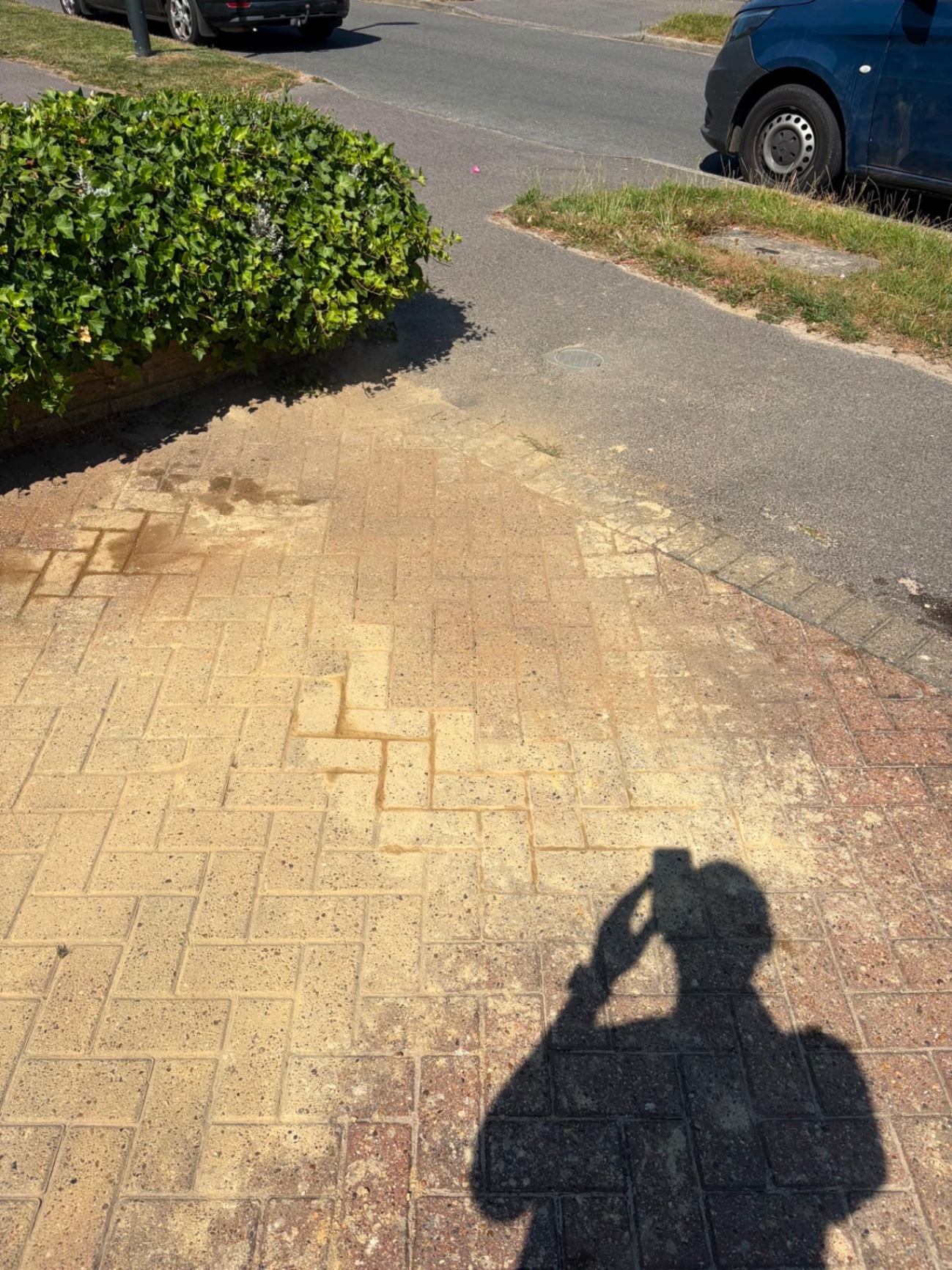
Underground water leaks rarely announce themselves. There's no puddle, no dripping tap, no obvious noise — just a slowly rising water bill, a patch of grass that stays suspiciously green, or a section of paving that quietly starts to sink. By the time most homeowners notice, the leak has usually been running for weeks or months. This guide — built around a real Grange Plumbing repair in Sussex — shows you exactly what to look for, what causes buried leaks in the first place, and how they're properly fixed.
What is an underground water leak?
Short answer
An underground water leak is water escaping from your buried supply pipe between the boundary and the house. Because the pipe is under paving or soil, leaks are often invisible on the surface — but they still push up your water bill, drop your pressure and damage the ground above.
An underground water leak is any escape of pressurised water from the buried section of your supply pipe — the pipe running from your boundary (where the water company hands over) up to your house. Because the pipe is buried under lawn, paving or a driveway, small leaks can run undetected for a very long time. Water finds the easiest route through the soil, so the visible symptom is often nowhere near the actual hole in the pipe.
What causes buried pipes to leak in the first place?
Underground water leaks are rarely random. Most of the pipes we replace across Sussex have one of a few very specific causes behind them.
Age and material
Galvanised steel pipes installed between the 1930s and 1970s are now well past their design life. Lead pipes are older still. Both corrode from the inside out and eventually pinhole. Early polythene from the 1970s and 80s also becomes brittle.
Ground movement and settlement
Clay soils across the South East expand and contract with the seasons. Over decades this movement stresses rigid pipes and old compression joints — a common failure point.
Frost damage
Pipes buried too shallow or passing through cold voids can freeze in a severe winter. When ice forms inside a pipe it expands and cracks the wall — sometimes only leaking once the thaw restores pressure.
Tree roots and drives
Roots don't puncture pipes on their own, but they exploit existing weak joints and push against tired fittings. New driveways laid over old supply pipes without ducting also concentrate load onto the pipe.
Bodged past repairs
Two or three compression fittings on a single supply pipe are a red flag. Each one is a potential future leak, and the underlying pipe is usually the real problem.
What we found on this Sussex job
Short answer
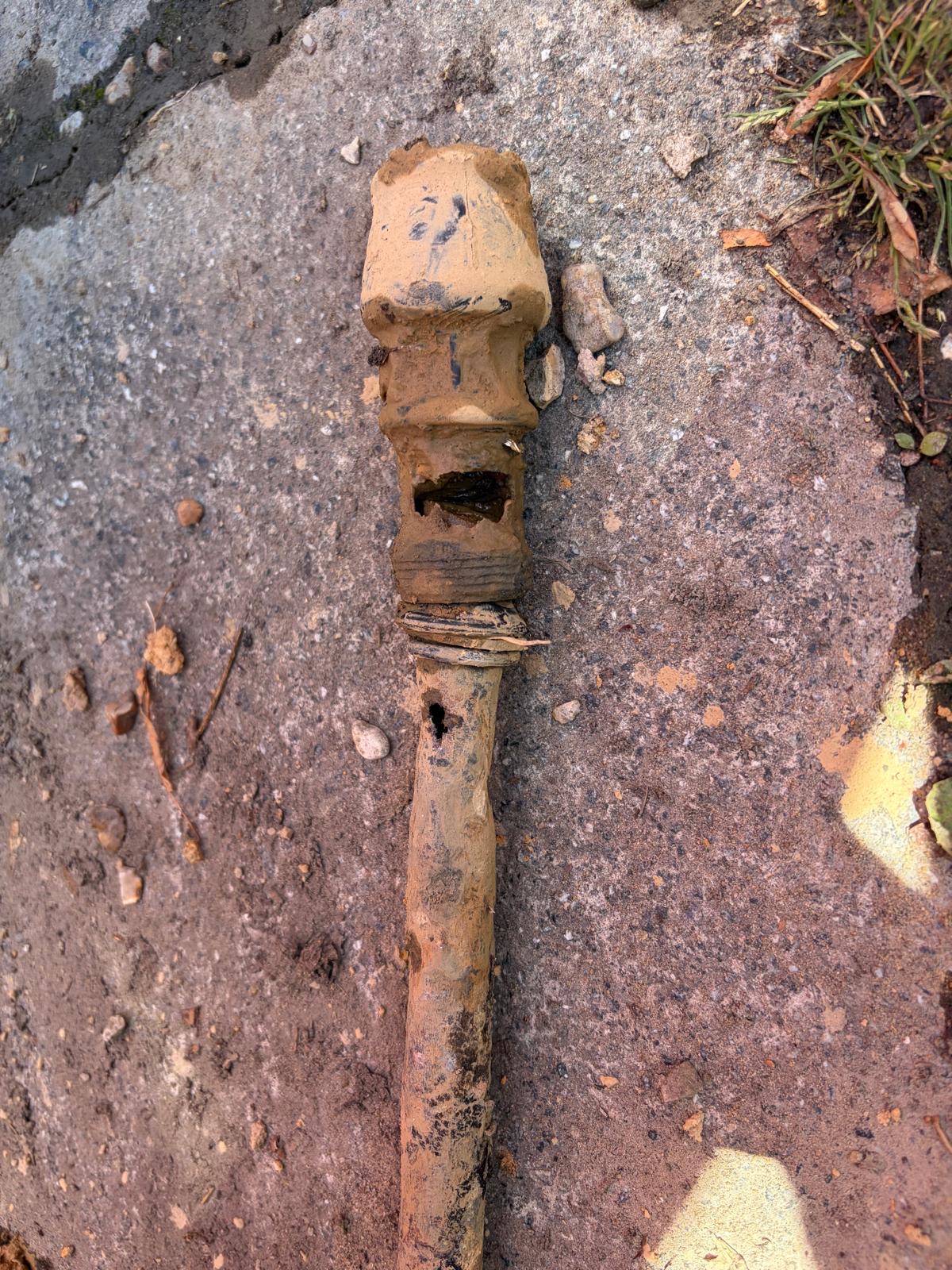
On this Sussex property, the buried steel supply pipe was heavily corroded, pitted and leaking from more than one pinhole. The pipe had been slowly failing for years — the driveway subsidence was the first visible symptom.
The photograph below is from a real job we did in Sussex — the same house whose driveway had started to sink. Once we opened the ground, the story was obvious. This is what a supply pipe at the end of its life actually looks like.
Why underground leaks are dangerous if ignored
It's tempting to leave a suspected buried leak alone — especially if pressure at the tap still seems fine. Don't. In the ground, the damage compounds every week.
- Your water bill keeps rising, sometimes by hundreds of pounds a year, until the pipe is fixed.
- Fine sand and sub-base wash out from under paving, footpaths and driveways — leading to expensive reinstatement bills.
- Prolonged soaking of clay soils near foundations can contribute to subsidence claims on the property.
- Lead pipes leach into the water supply at higher rates when they are corroded — a real health concern in older homes.
- The next hard frost or ground movement can turn a slow leak into a full burst, causing sudden flooding.
How we find and fix buried leaks
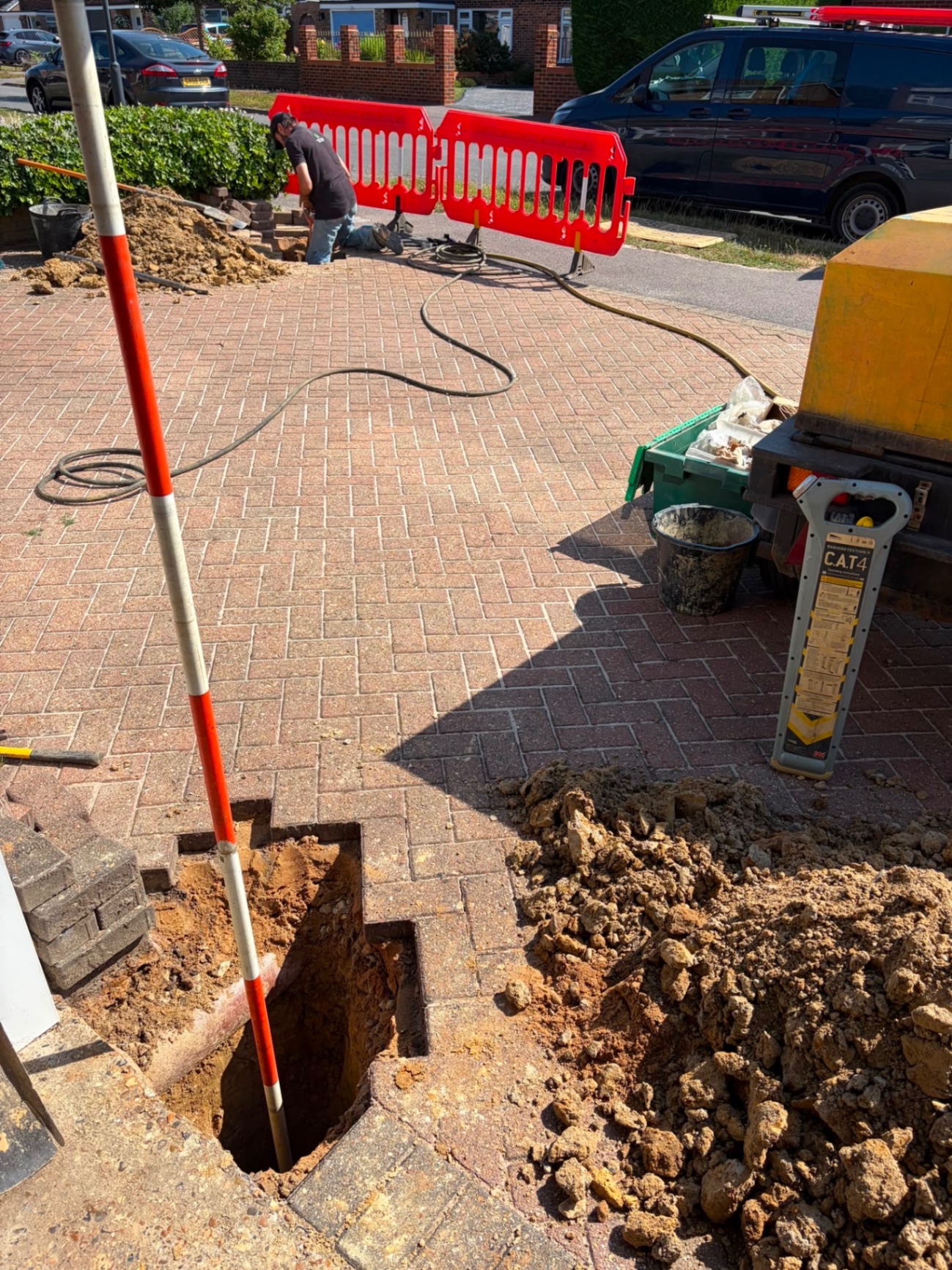
Modern underground leak detection is completely different from the exploratory digging homeowners still fear. We use acoustic listening equipment to hear the leak through the ground, thermal imaging to detect temperature differences caused by escaping water, and — where needed — tracer gas to pinpoint the exact spot to within a metre. That means we can usually tell you exactly where to dig, and dig once.
Repair the leak
On a sound pipe with a single confirmed leak, a targeted spot repair is often the right call — small excavation, new compression fitting, backfill and done.
Replace the pipe
On an old lead or galvanised steel supply pipe, replacement with 32mm MDPE is almost always the better long-term investment. It restores full pressure, ends the cycle of pinholes, and lasts 50+ years.
Moling — the trenchless option
For longer runs under driveways and lawns we use pneumatic moling to pull a new pipe through underground from a single pit. No trench across the garden.
Repair versus replace — how we decide
Two homeowners with the same symptom often need very different fixes. Here's how we weigh it up on site.
- Pipe material: any lead, galvanised steel, or pre-1990s pipe → replace, don't repair.
- Age of pipe: over 40 years old → replace even if only one pinhole is confirmed.
- Number of confirmed leaks: two or more within a few years → replace the whole run.
- Pressure at the incoming main: chronically low → replace, especially if the internal plumbing is fine.
- Reinstatement cost: if the disruption is happening anyway, a full replacement is usually only marginally more expensive than a spot repair.
The finished result
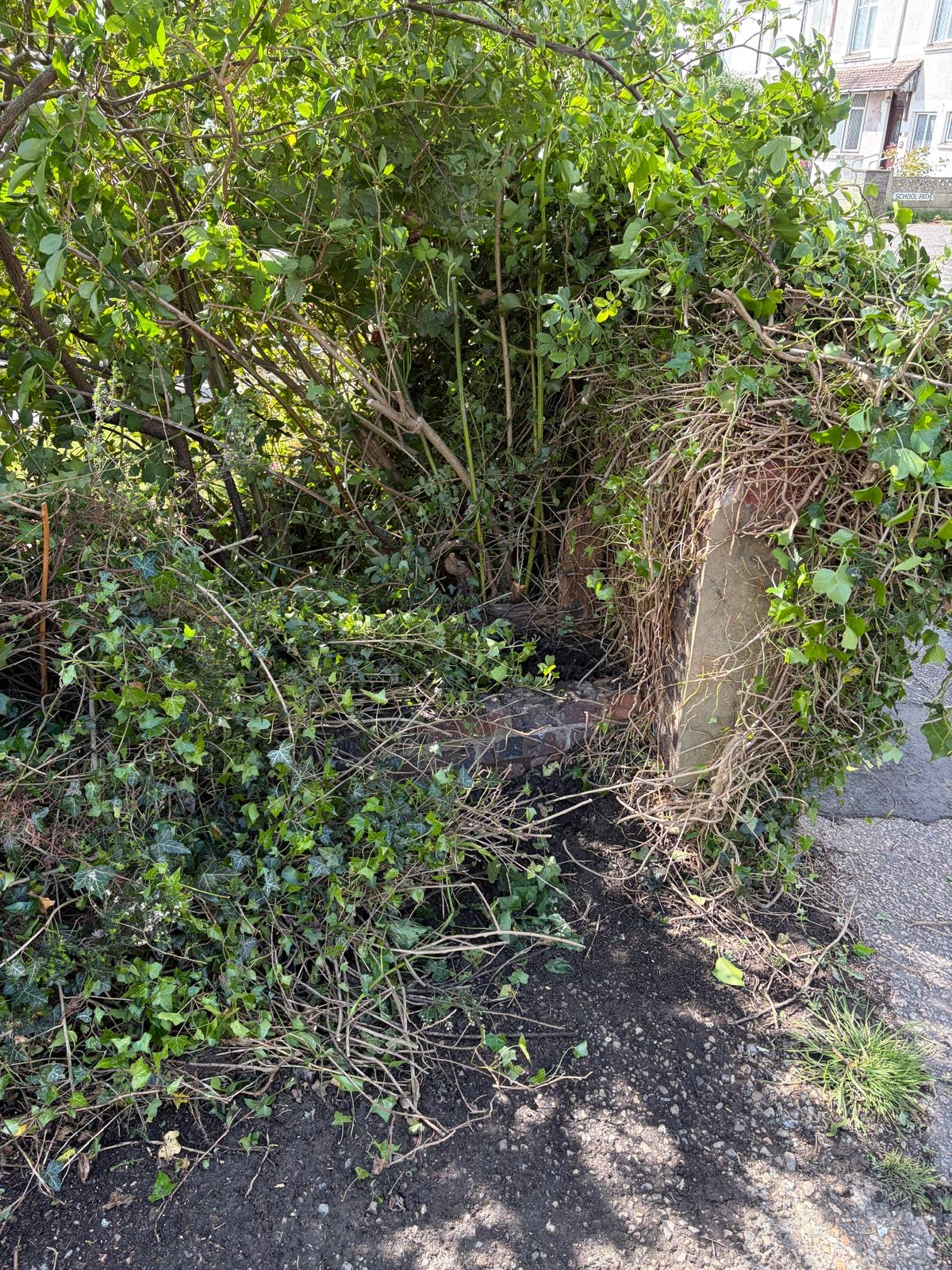
On this Sussex job we replaced the whole supply pipe run with new 32mm blue MDPE, fitted new lever stop taps inside and outside the property, reinstated the concrete around the entry pit and put the block paving back down. The customer's pressure was noticeably stronger, the meter now sits completely still with everything off, and the buried pipe is good for the next 50 years.
Frequently Asked Questions
How do I know if my underground water pipe is leaking?
The clearest test is to turn off every tap and appliance and watch your external water meter for two minutes. Any movement means water is escaping. Combined with sunken paving, damp patches or a rising water bill, it almost always points to a buried supply pipe leak.
Why is my water bill suddenly higher than normal?
A hidden underground leak is one of the most common causes. Water escapes into the ground 24 hours a day and shows up on your meter — often adding hundreds of pounds a year to a metered bill.
Can an underground water leak damage my house or driveway?
Yes. Long-running leaks wash out the fine material supporting driveways and paths, and prolonged soaking of clay soils near the foundations can contribute to subsidence. Sunken paving is often the earliest visible sign.
Who is responsible for the underground supply pipe?
In the UK, the water company owns the pipe from the main in the road up to your boundary. From the boundary up to your house is the homeowner's responsibility — which is why most driveway leaks are yours to fix.
Should I repair the leak or replace the whole pipe?
On old galvanised steel or lead pipes, replacement is almost always the better call. A single pinhole leak on an ageing pipe usually means more are on the way. New 32mm MDPE ends the cycle for 50+ years.
How long do steel water supply pipes last in the UK?
Galvanised steel service pipes were common between the 1930s and 1970s and have a realistic service life of around 40–60 years. Anything installed before the 1980s is now beyond its design life.
Can you fix an underground leak without digging up my whole garden?
Yes — in most cases. Proper leak detection pinpoints the leak to within a metre. For longer runs under driveways we use trenchless moling, which pulls a new pipe through underground from a single entry pit.
How much does an underground water leak repair cost?
A targeted spot repair typically ranges from £450–£900 depending on depth and access. A full water main replacement using moling on a domestic property is usually £1,600–£2,800 including new stop taps and reinstatement. Fixed price, given in writing before work starts.
How long does a water main replacement take?
Most domestic jobs are completed in a single working day. Longer or more complex runs can take two.
Do you cover East Grinstead, Crawley and the wider Sussex area?
Yes. We cover East Grinstead, Forest Row, Lingfield, Crawley, Three Bridges, Haywards Heath, Burgess Hill, Horley, Reigate, Redhill, Dorking, Oxted and Caterham as our core service area.
More guides from Grange Plumbing
Need a Free Quote?
Free site visit, fixed written quote, no call-out fees — across Sussex & Surrey.